

Overview
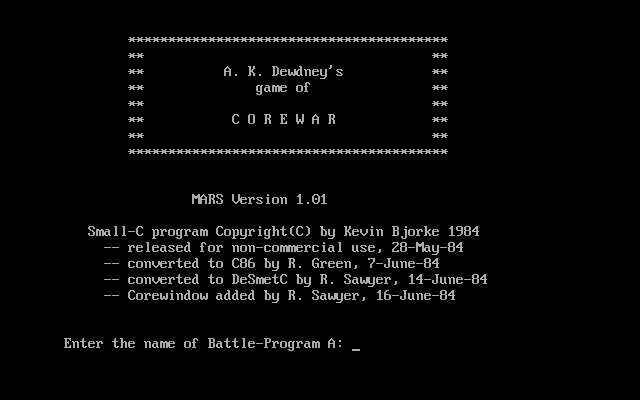
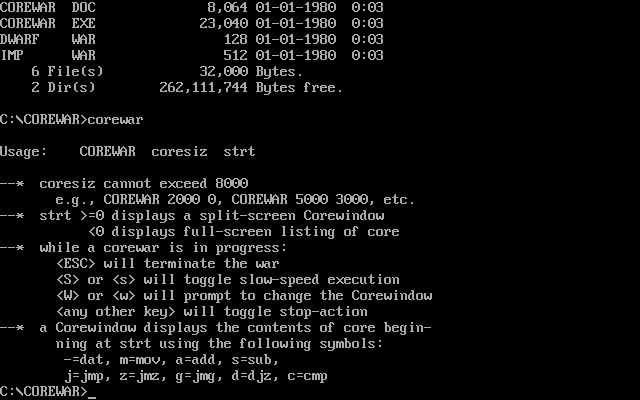
Released in 1984, this intriguing game involves players writing programs that compete for control of a virtual computer. Unlike traditional video games that focus on graphics, it is a programming contest where the objective is to write a program that can eliminate the opponent’s code.
Gameplay Mechanics
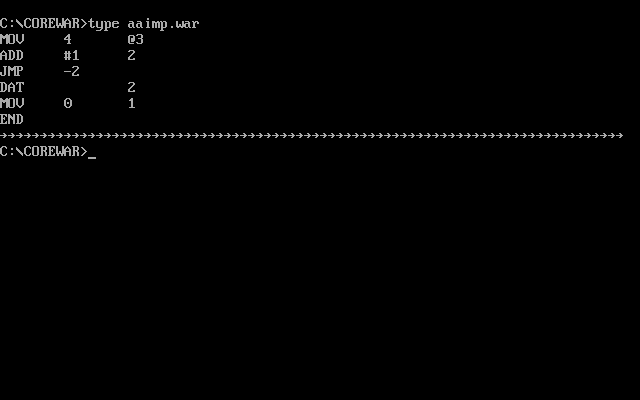
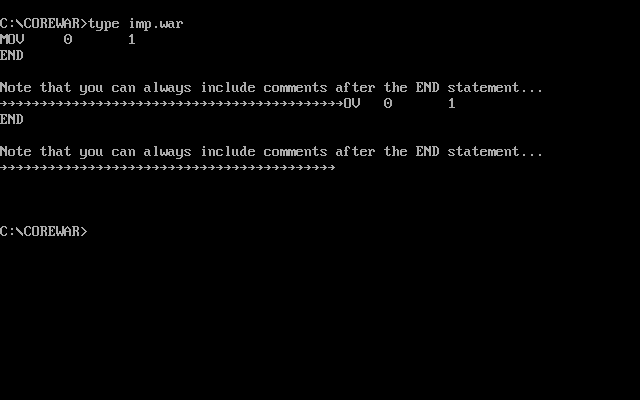
The game is set in a virtual memory space where programs, written in an assembly-like language, fight to overwrite each other’s code and cause the opponent’s program to crash. Each player creates a “warrior” program that competes to take control of the system’s memory.
Historical Significance
The game originated in the early 1980s as a programming challenge conceived by Victor Vyssotsky, H. Douglas McIlroy, and Robert Morris at Bell Labs. It was designed to test the skills of engineers in low-level programming and strategic thinking. Over time, it garnered a cult following among programming enthusiasts and became a staple challenge in computer programming circles.
Influence and Legacy
This unique coding challenge inspired numerous competitions and variants over the years, maintaining its appeal among programmers who enjoy testing their problem-solving skills. It laid the groundwork for a variety of programming games and challenges, influencing fields such as cybersecurity simulations and competitive programming.
Interesting Facts
- The programming language used in the game, known as Redcode, is expressly designed for the game’s environment.
- It has inspired several competitions, including the International Core War Society championship.
- The game’s concept has been utilized in educational settings to teach concepts of programming and computer architecture.