

DB Version: 1.0.1 - Last Update: 23/09/2025
Jaguar Games
Jaguar
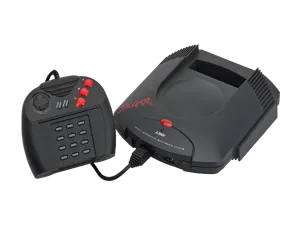
Year: 1993
Generation: Fifth
Producer: Atari
Launch Year: 1993
Discontinued: 1996
Units Sold: 250,000
Top Game: Alien vs. Predator
Price at Launch: $249.95
Country of Origin: United States
CPU: Tom chip 64-bit RISC processor
RAM: 2 MB
Devices / Peripherals: Jaguar Controller,Jaguar CD,Jaguar Multi-Tap,Jaguar Memory Cartridge,Jaguar Pro Controller
1. What Was the Atari Jaguar?
The Atari Jaguar, released in 1993, was Atari’s final home console and one of the most ambitious systems of its time. Marketed as the world’s first 64-bit console, it promised unmatched power and next-generation performance—but was ultimately hampered by a complex architecture and lack of developer support.
Despite its failure, the Jaguar remains a cult icon for its unique hardware, bold marketing, and place in gaming history as Atari’s swan song.
2. Key Features of the Jaguar
- Multi-chip 64-bit architecture: used two custom processors ("Tom" and "Jerry") alongside a 68000 co-CPU.
- Cartridge-based: used ROM cartridges with high-speed access, later supported CD games via Jaguar CD add-on.
- Unconventional controller: included a numeric keypad and overlays, reminiscent of the 1980s.
- Advanced graphics (for the time): supported 3D rendering, sprite scaling, and hardware blitting.
- Modular expansion: featured ports for memory upgrades and peripherals like the Jaguar VR headset (never released).
3. Game Library and Market Struggles
- Limited library: only about 50 official games were released.
- Top titles: included Tempest 2000, Alien vs. Predator, Doom, and Iron Soldier.
- Complex programming: hardware was hard to code for, discouraging third-party developers.
4. Legacy and Cult Following
The Atari Jaguar was a commercial flop, but it remains a beloved oddity in gaming history. Its bold attempt to innovate earned it a dedicated fanbase that continues to develop homebrew games and hardware mods to this day.
- Jaguar CD: an add-on that offered FMV games and multimedia titles—though plagued by reliability issues.
- Homebrew scene: still active, with new titles and dev tools released by fans and indie devs.
- Retro collector’s gem: highly sought-after for its uniqueness, despite (or because of) its flaws.
GAMES JAGUAR
© 2026 Don't think about what you see, but create what you imagine.