

DB Version: 1.0.1 - Last Update: 23/09/2025
Fm-7 Games
Fm-7
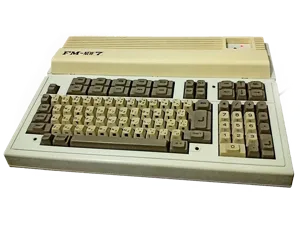
Year: 1982
Producer: Fujitsu
Launch Year: 1982
Discontinued: 1986
Units Sold: 500,000 units
Top Game: Dragon Slayer
Price at Launch: ¥59,800
Country of Origin: Japan
CPU: 2x MBL 68B09
RAM: 64KB
Devices / Peripherals: Cassette,Floppy disk
1. What Was the Fujitsu FM-7?
The FM-7, released by Fujitsu in 1982, was a Japanese 8-bit personal computer and part of the broader FM (Fujitsu Micro) series. It followed the FM-8 and was designed to be a more affordable, consumer-friendly alternative, quickly becoming a favorite for home users, students, and game developers.
With dual CPUs, high-resolution graphics, and rich sound, the FM-7 stood out in Japan’s crowded early computer market and carved a niche in both education and gaming.
2. Key Features of the FM-7
- Dual Motorola 6809 CPUs: one for main processing, the other for display handling—rare at the time.
- High-resolution graphics: supported 640×200 pixel display and up to 8 colors simultaneously.
- FM synthesis sound: thanks to Yamaha sound chips, audio was advanced for an 8-bit machine.
- BASIC in ROM: included Microsoft BASIC and Fujitsu’s own F-BASIC interpreter.
- Expandable system: supported floppy drives, printers, and even Kanji ROMs for Japanese text.
3. Software and Gaming Scene
- Early dev platform: used by legendary studios like Enix, Micro Cabin, and Nihon Falcom.
- Popular genres: RPGs, visual novels, and adventure games thrived on the platform.
- Cross-platform ports: many FM-7 games were ported to PC-8801, MSX, and X1 systems.
4. Legacy and Preservation
The FM-7 is remembered as a landmark in Japanese home computing. It helped nurture a generation of developers and is still preserved by retro enthusiasts and emulation projects today.
- Respected in Japan: key to the early success of Japan’s software industry.
- Active emulation: supported by MESS, XM7, and other emulators.
- Collector's piece: sought after for its iconic design and dual-CPU engineering.
GAMES FM-7

© 2026 Don't think about what you see, but create what you imagine.