

DB Version: 1.0.1 - Last Update: 23/09/2025
Casio Pv1000 Games
Casio Pv1000
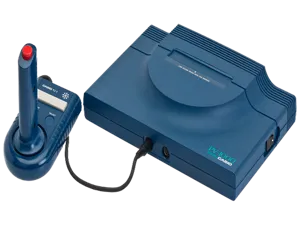
Year: 1983
Generation: Third
Producer: Casio
Launch Year: 1983
Discontinued: 1984
Units Sold: around 100,000 units
Top Game: Block Game
Price at Launch: 19,800 yen
Country of Origin: Japan
CPU: NEC µPD780C
RAM: 2 KB of RAM
1. What Was the Casio PV-1000?
The Casio PV-1000 was a short-lived home video game console released exclusively in Japan in 1983. Developed by Casio, it was one of the company’s first forays into the gaming world, launched to compete with systems like the Nintendo Famicom and Sega SG-1000.
Despite having relatively capable hardware, the PV-1000 struggled in a rapidly evolving market and was discontinued less than a year after launch, making it a rare and often overlooked piece of console history.
2. Key Features of the PV-1000
- 8-bit processor: powered by a Zilog Z80A CPU, a popular chip of the era.
- Single-button joystick: included two simple controllers for basic arcade-style gameplay.
- Cartridge-based system: games were distributed on ROM cartridges with unique designs.
- Basic sound and graphics: capable of 4 colors and simple beeper-style audio output.
- TV output: connected directly to home televisions for plug-and-play use.
3. Game Library and Limitations
- Only 13 games released: including Dig Dug, Pooyan, and Amidar.
- No backward compatibility: incompatible with Casio’s PV-2000 or other systems.
- Minimal developer support: few third-party developers backed the platform.
4. Legacy and Rarity
Though a commercial failure, the Casio PV-1000 has earned a place in gaming history as one of the rarest consoles ever made. Its small library, limited run, and obscure status make it a coveted item for serious collectors.
- Ultra-rare hardware: complete boxed systems are highly valuable on the collector market.
- Snapshot of early 80s gaming: reflects Japan’s experimental console era.
- Documented online: preserved through enthusiast videos, emulation projects, and retro archives.
GAMES CASIO PV1000

© 2026 Don't think about what you see, but create what you imagine.