

DB Version: 1.0.1 - Last Update: 23/09/2025
Casio Loopy Games
Casio Loopy
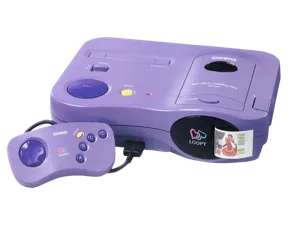
Year: 1995
Generation: Fifth
Producer: Casio
Launch Year: 1995
Discontinued: 1997
Units Sold: 100,000 units
Top Game: Magical Shop
Price at Launch: ¥19,800
Country of Origin: Japan
CPU: SH7021
RAM: 32 KB of RAM
1. What Was the Casio Loopy?
The Casio Loopy was a 16-bit home video game console released exclusively in Japan in 1995. Developed by Casio, the Loopy was a bold and unusual system targeted specifically at a female audience — a rarity in the gaming industry at the time.
Its most unique feature was its built-in thermal color sticker printer, allowing players to print out images and in-game artwork as real-life stickers. It blended creative expression with casual gaming in a way that few other consoles attempted.
2. Key Features of the Casio Loopy
- Sticker printer: thermal color printer built into the console to create custom stickers from gameplay scenes.
- Designed for girls: featured pastel colors, cute graphics, and games centered on fashion, romance, and creativity.
- 16-bit architecture: comparable to SNES-level hardware in terms of visuals and audio.
- Controller and mouse support: offered both traditional input and PC-style mouse for drawing functions.
- Limited release: only available in Japan, making it a collector’s rarity today.
3. Game Library and Themes
- Only 10 official games: all exclusive to the platform and mostly visual novels or art-focused titles.
- Popular titles: included Anime Land, Dream Change, and Wanwan Aijou Monogatari.
- Creativity-focused gameplay: encouraged interaction through coloring, story choices, and sticker design.
4. Legacy and Collector Status
Though commercially unsuccessful and short-lived, the Casio Loopy is now a cult favorite among retro collectors for its uniqueness and charm. It stands out as one of the few consoles made with young female players in mind.
- Ultra-rare hardware: units in working condition, especially with unused sticker rolls, are highly sought after.
- Historical curiosity: often referenced in discussions about gender targeting in video game history.
- Still celebrated: covered in gaming documentaries, YouTube retrospectives, and museums.
GAMES CASIO LOOPY

© 2026 Don't think about what you see, but create what you imagine.