

Historical Context & Trivia
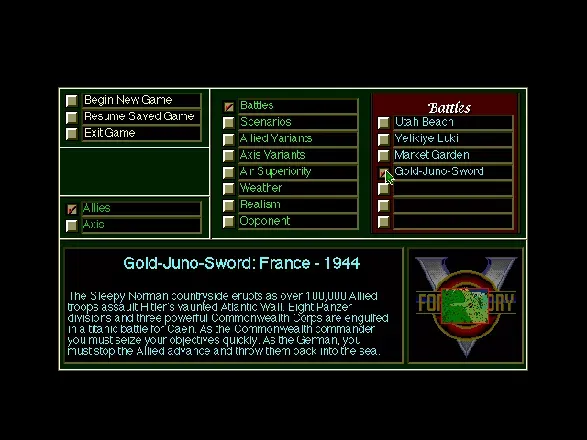
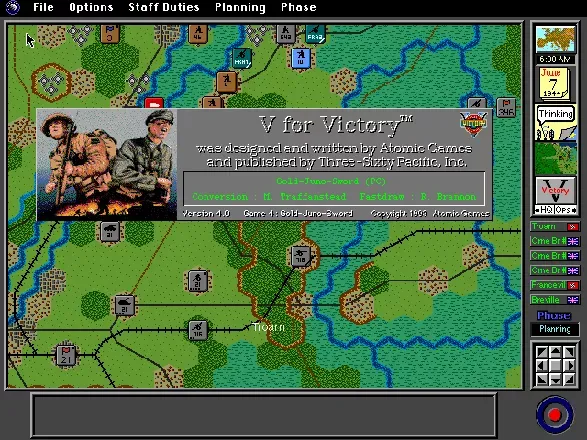
V for Victory: Gold-Juno-Sword, released in 1993, stands as the fourth and final installment in the acclaimed V for Victory series, a definitive collection of turn-based wargames that meticulously recreated the World War II D-Day operations. This title specifically shifts the focus from the American landings at Utah Beach to the critical British and Canadian sectors, covering the intense battles for the Gold, Juno, and Sword beaches and the subsequent struggle to capture the strategic city of Caen.
The game was developed by Atomic Games, Inc., a studio renowned for its deep simulation mechanics and historical accuracy, and published by Three-Sixty Pacific, Inc.. As the concluding chapter of the series, it brought the narrative back to the Normandy countryside, depicting the titanic clash between eight German panzer divisions and three powerful Commonwealth corps, offering players a comprehensive campaign mode that simulated the entire battle rather than isolated skirmishes.
Gameplay & Technical Features
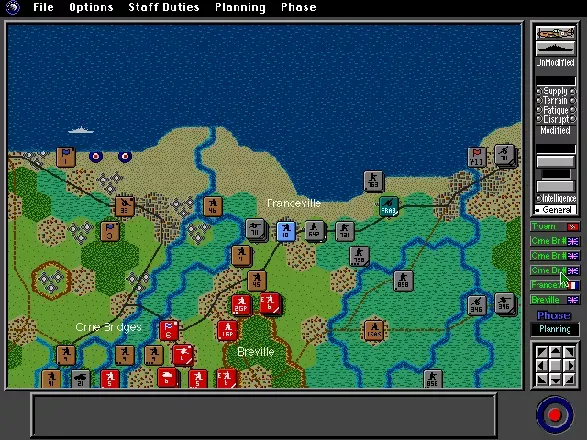
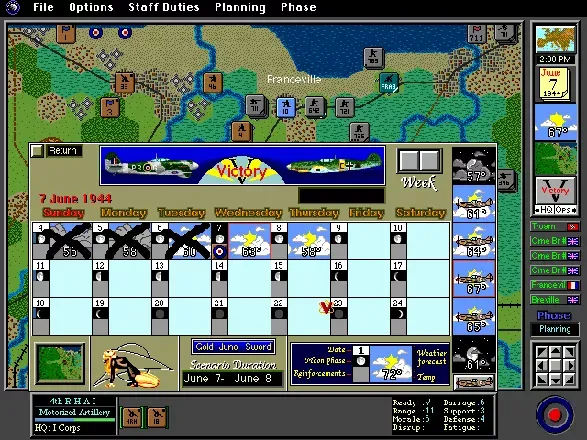
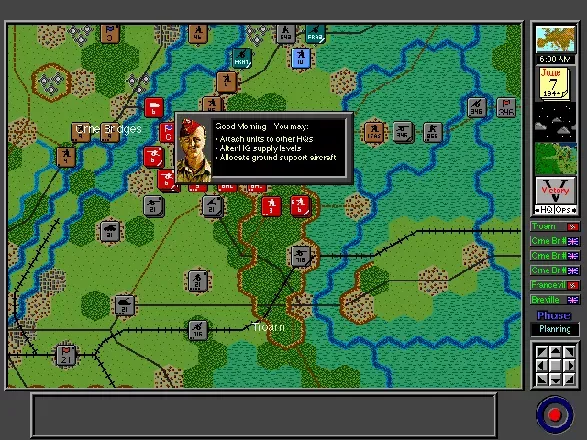
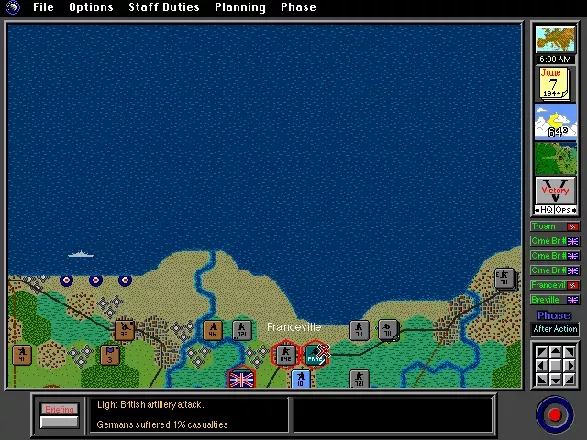
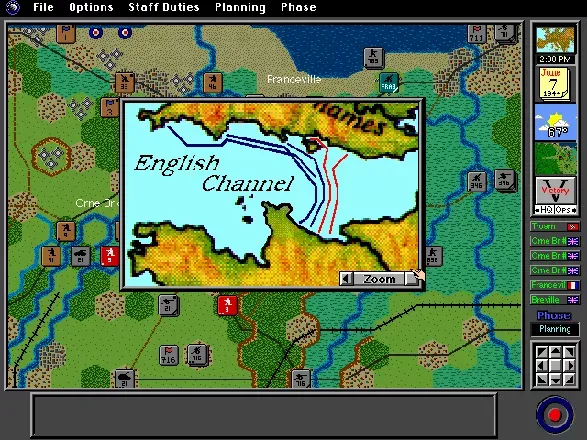
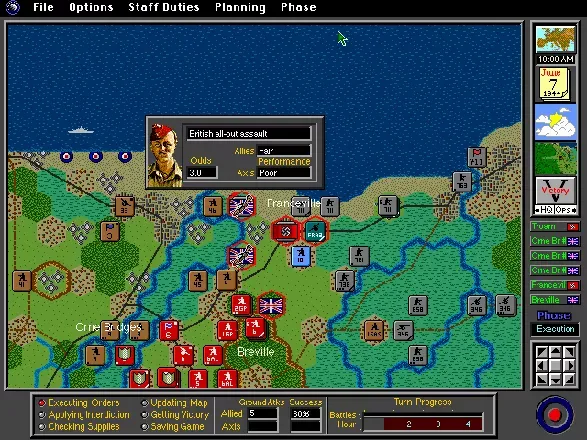
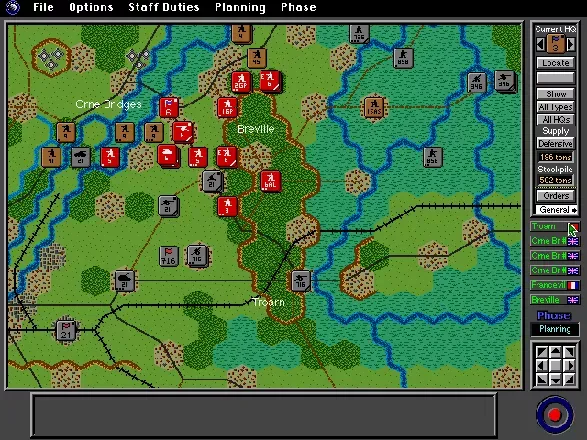
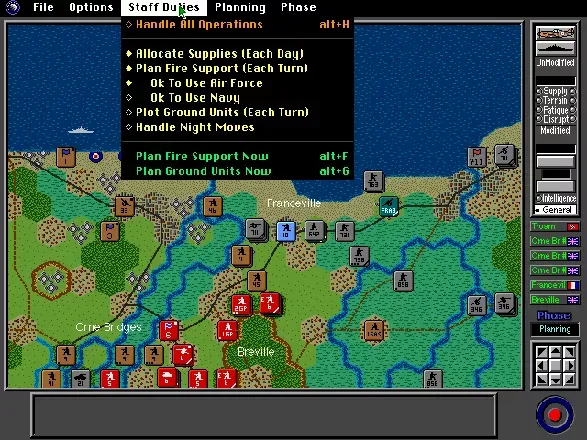
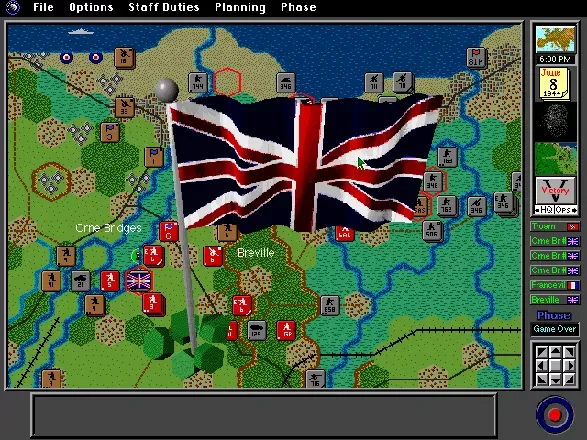
As a Strategy and tactics game, V for Victory: Gold-Juno-Sword utilizes a simultaneous turn-based system played on a hex-grid, where players command forces from a top-down perspective. The gameplay is deeply detailed, simulating not only ground troop movements but also complex elements such as air support, naval gunfire, interdiction, and supply lines. A unique and critical mechanic is the weather system, which players can select as historical or modified, directly influencing the effectiveness of air and naval assets as well as the mobility of troops on land.
Designed for the DOS platform, the game operates within the tile-based and hex-based framework typical of the era’s wargames, requiring DOSBox emulation for modern execution. The technical presentation features a distinct visual style that emphasizes clarity of unit placement and terrain, accompanied by sound effects that enhance the immersion of the battlefield. The game allows players to choose between the Commonwealth and German commands, each with distinct objectives: securing a foothold in Europe for the Allies or forcing a withdrawal from the continent for the Germans.
Collector’s Value & Rarity
While V for Victory: Gold-Juno-Sword is no longer classified as abandonware and can be acquired through various digital archives, it retains significant value among collectors of historical World War II wargames due to its status as the final entry in a highly regarded series. Its rarity is enhanced by its specific focus on the often-overlooked British and Canadian sectors of D-Day, making it a unique resource for enthusiasts of the Normandy campaign. The game is preserved in its original DOS format, maintaining the authentic experience of the 1993 release.
For collectors, the primary physical collateral of interest includes the original Reference Manual and packaging, which provide essential context for the game’s complex mechanics and historical scenarios. The series is often sought as a complete set, with this title completing the quartet alongside D-Day Utah Beach, Market Garden, and Velikiye Luki. The game’s enduring legacy is cemented by Atomic Games‘ reputation for creating detailed, hex-based simulations that accurately modeled the strategic realities of the Second World War.