

Historical Context & Trivia
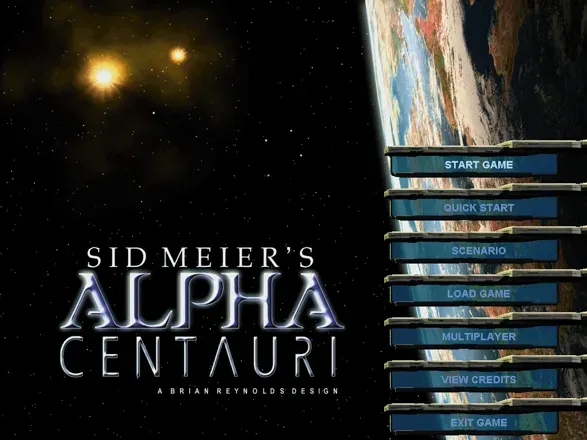
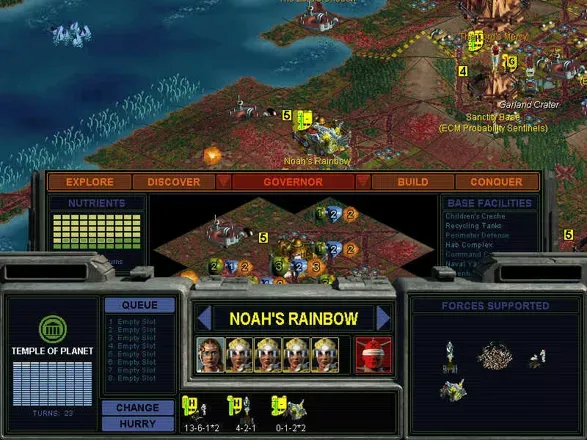
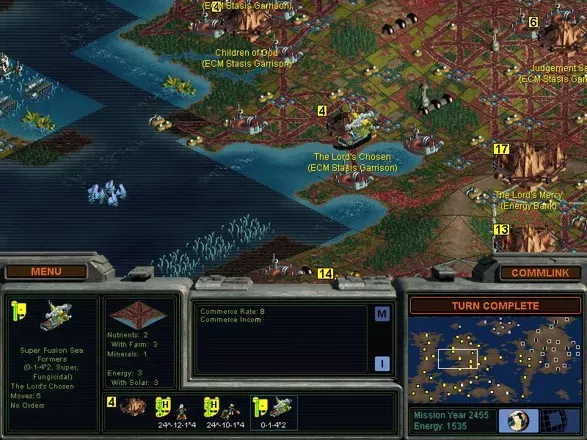
Sid Meier’s Alpha Centauri (1999) is one of the best-known science-fiction strategy games of the late 1990s, often treated as a spiritual offshoot of the Civilization tradition while carving out its own identity through a darker, ideological vision of interplanetary colonization. It was released for Windows in February 1999 and places humanity’s expansion into the Alpha Centauri system at the center of its setting.
The game was developed by Firaxis Games and published by Electronic Arts; sources also link later platform releases to Aspyr Media and Loki Software, reflecting the title’s broader commercial life beyond its original PC launch. Multiple references describe it as a turn-based strategy game focused on exploration, empire-building, and ideological conflict on an alien world.
Gameplay & Technical Features
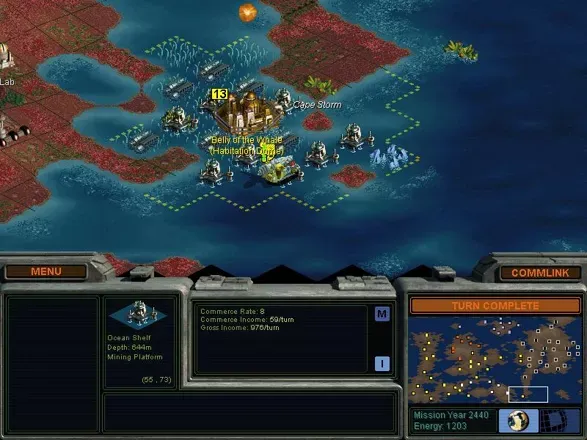
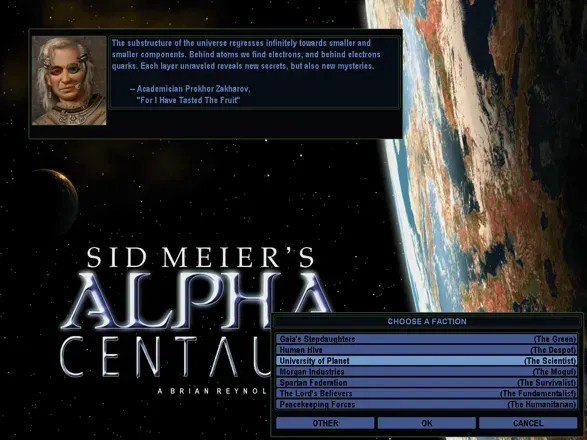
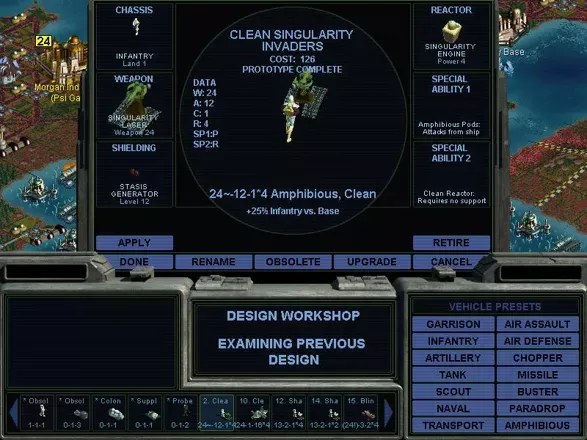
Sid Meier’s Alpha Centauri is a turn-based strategy game built around faction management, expansion, research, diplomacy, and conquest, with a strong emphasis on distinct political philosophies rather than generic civilizations. Its sci-fi premise is framed as a struggle between competing human factions trying to shape a hostile new planet, which gives the game a more thematic and narrative-driven structure than many contemporaneous strategy titles.
On Windows, the original release used CD-ROM distribution and supported multiplayer alongside the single-player campaign, with later editions and ports extending the game to other systems. Coverage notes its place within the broader 4X strategy category and identifies the title’s early PC release window in February 1999, with Mac and Linux versions arriving later through third-party porting studios.
Collector’s Value & Rarity
In preservation terms, Sid Meier’s Alpha Centauri is not an obscure rarity; it is a widely documented PC strategy title with multiple releases and re-releases, which generally makes it easier to locate than niche late-1990s PC games. Its collector value tends to come more from condition, completeness, and specific regional packaging than from extreme scarcity.
Notable physical and edition-related factors include the original Windows CD-ROM release, later Macintosh and Linux adaptations, and bundled or reissued forms such as the Alien Crossfire compilation and other later package variants noted in preservation databases. Regional publishing differences also exist, with additional publishers appearing across Europe and other markets, which can matter to collectors seeking a specific localized release.