
“`html
Overview
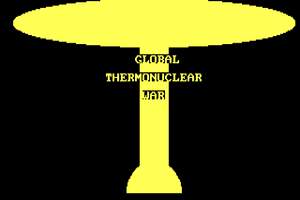
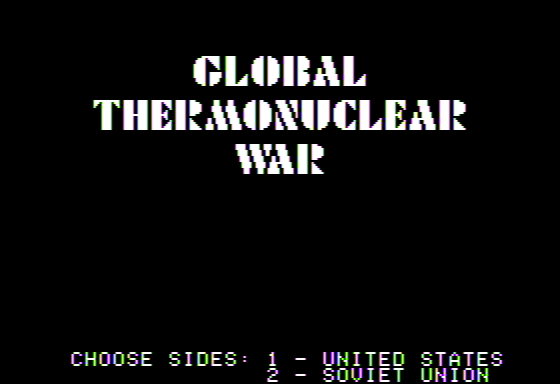
Released in 1983, this game is often remembered as a significant element in popular culture, primarily due to its connection with the movie “WarGames.” The game simulates a worldwide nuclear conflict, allowing players to experience the tension and strategy involved in managing a large-scale military operation during the Cold War era.
Gameplay
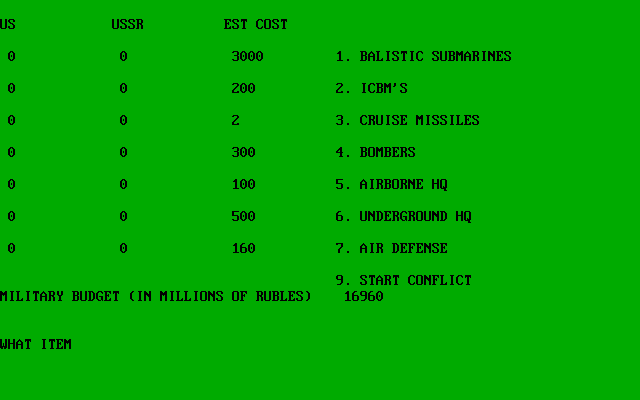
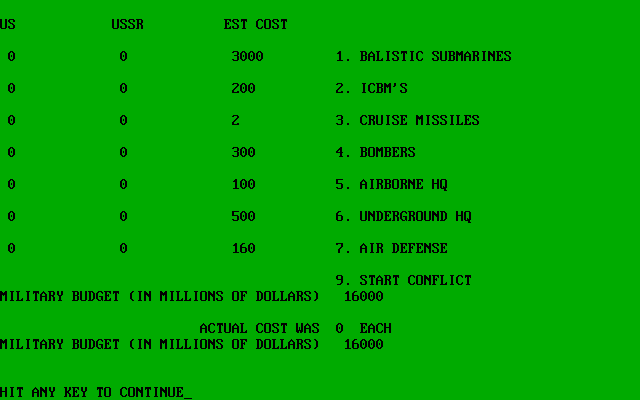
Players engage in a high-stakes simulation where they must strategize to prevent global annihilation or emerge as the dominant superpower. The game involves map-based interactions, where users allocate resources, manage defense systems, and make critical decisions under pressure. The escalation of conflict requires careful maneuvering and predicting the adversary’s moves.
Historical Context
In the early 1980s, the Cold War was at its peak, and the fear of nuclear warfare was a prevalent concern worldwide. This game’s simulation provided not just entertainment but a form of speculative exploration into the disastrous potential of nuclear conflict. It contributed to the public discourse on the impacts of thermonuclear war and the importance of diplomatic strategies.
Cultural Impact
While not a commercial release, the concept was notably featured in the film “WarGames,” which raised questions about the control and potential errors of automated nuclear defense systems. This connection profoundly influenced public perception and inspired discussions about technology’s role in military strategy.
Curation and Legacy
Despite its fictional representation, the game’s idea long lingered in gaming culture as an example of how games could engage with real-world issues and influence public perception. It became a template for subsequent titles exploring geopolitical, strategic themes.
“`