
Overview
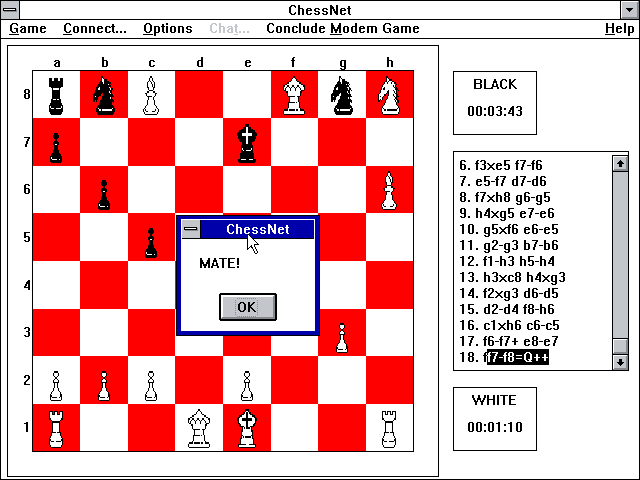
Released in 1992, Chess Net is a digital adaptation of the classic strategy game of chess. Designed for early virtual multiplayer experiences, it provides an environment where players can compete against one another over a network connection. This game was among the pioneering titles that allowed chess enthusiasts to play against real opponents remotely, contributing to the evolution of online gaming.
Gameplay
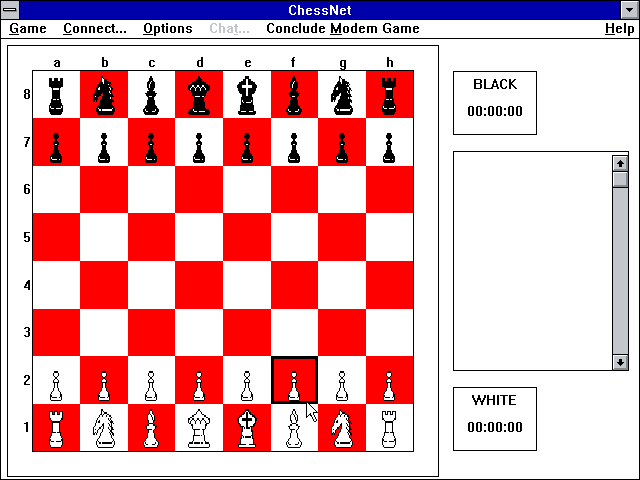
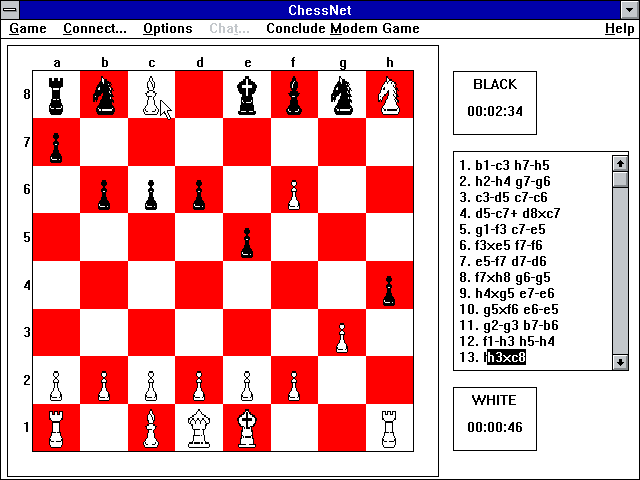
The game follows traditional chess rules, offering classic gameplay elements where two players face off on an 8×8 board with the standard pieces: pawns, knights, bishops, rooks, a queen, and a king. Chess Net emphasizes tactical planning and strategic moves to checkmate the opposing king. The game interface, while simple by modern standards, was intuitive for its time, allowing players to easily make moves and follow the flow of the game.
Technological Innovation
At the time of its release, Chess Net stood out because of its network capabilities, which were not commonly found in early ’90s games. It utilized existing network infrastructures to connect players, laying groundwork for future developments in online gaming. This capability made it possible for chess players from different locations to challenge each other without being physically present in the same room.
Historical Significance
While not as well-known as more recent chess software like Chessmaster or popular chess websites today, Chess Net had an important role in shaping how multiplayer online games were developed. It demonstrated the potential of connecting players across distances, paving the way for more sophisticated networked games.
Legacy
Chess Net may not have the name recognition of later titles, but its contributions to the genre and online gaming are undeniably significant. It served as an early example of how network technology could enhance competitive gaming experiences, influencing how developers approached game design in an increasingly connected world.