





Historical Context & Trivia
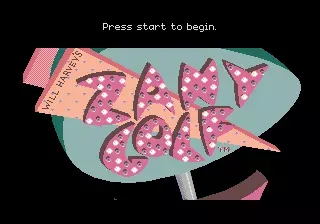
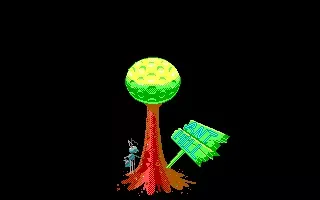
Will Harvey’s Zany Golf is a whimsical mini-golf video game first released in 1988, originally designed for the Apple IIGS and later ported to platforms such as Amiga, Atari ST, DOS and the Sega Genesis/Mega Drive. Emerging during a period when computer golf titles tended to chase realism, it stood out by turning miniature golf into a surreal arcade-style experience filled with bouncing hamburgers, pinball tables and fantasy obstacles instead of traditional fairways and bunkers.
The game was created by programmer-designer Will Harvey and developed by his studio Sandcastle, with publishing handled by Electronic Arts, which at the time was heavily promoting auteur-style “software artists.” On DOS, Zany Golf inherited the core design of the Apple IIGS original while adapting to IBM PC hardware, contributing to Harvey’s reputation that would later be reinforced by his work on titles like The Immortal. Modern reissues and rights management around the game have involved Piko Interactive LLC, which has acquired and re-published numerous classic computer and console games.
Gameplay & Technical Features
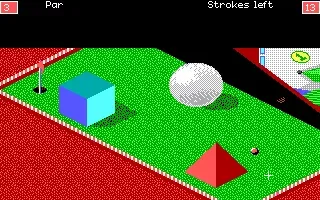
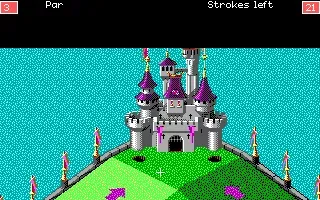
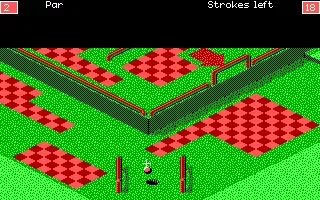
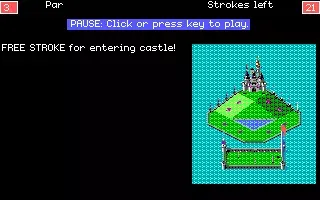
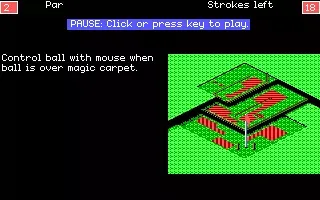
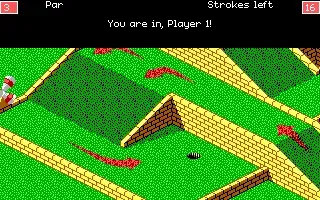
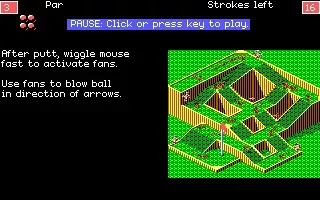
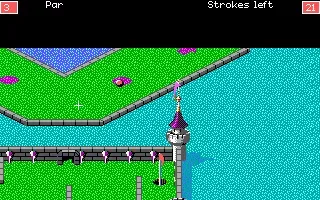
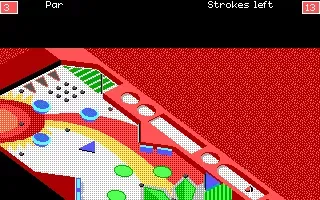
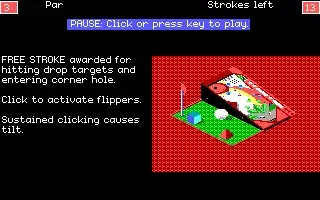
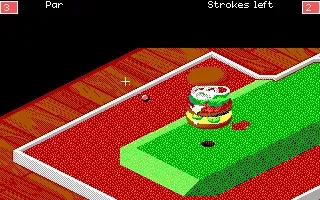
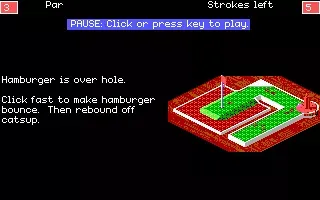
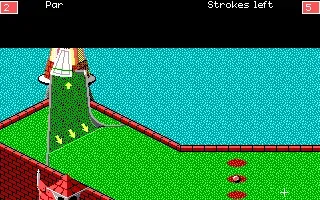
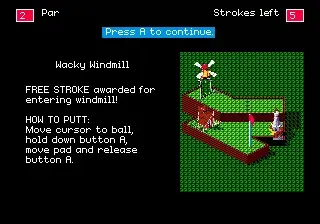
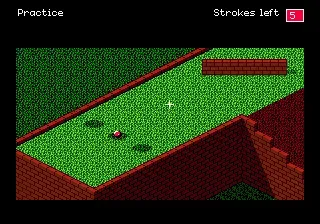
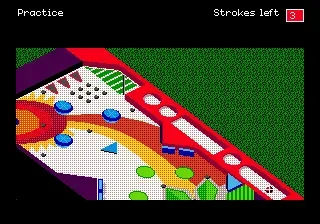
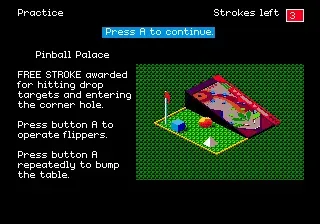
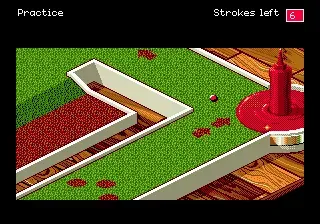
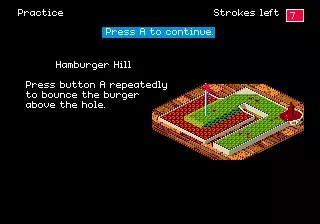
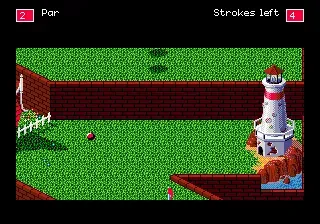
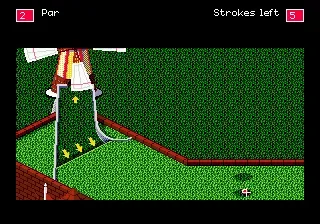
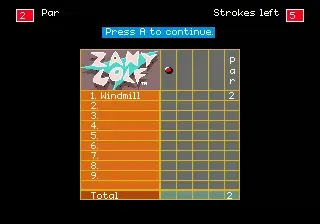
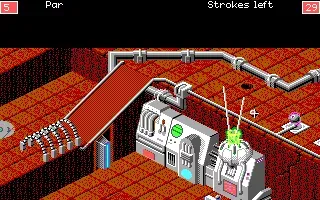
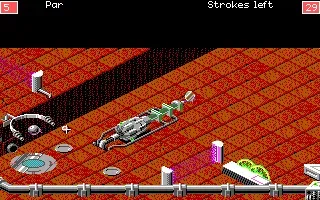
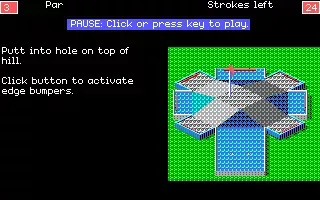
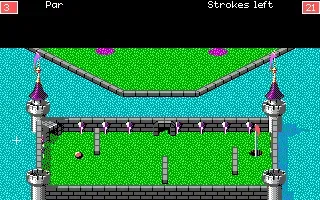
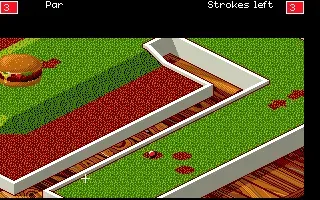
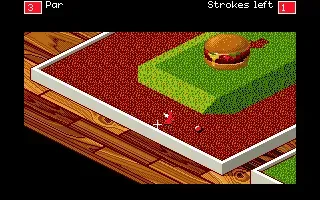
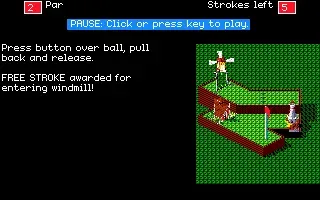
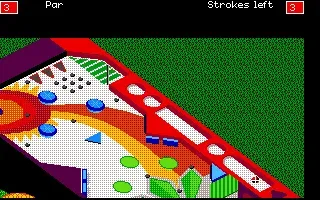
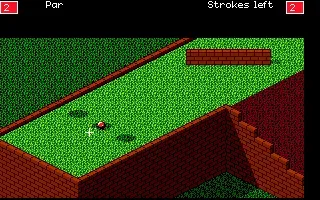
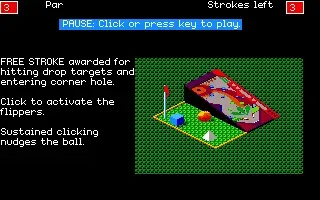
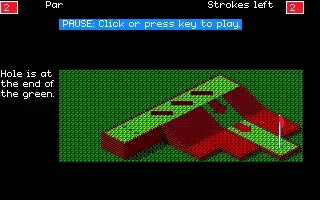
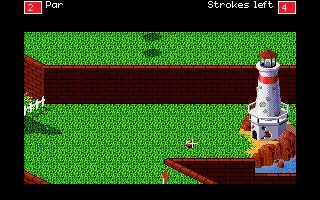
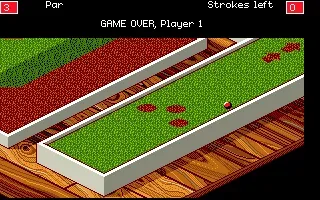
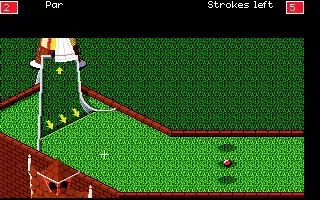
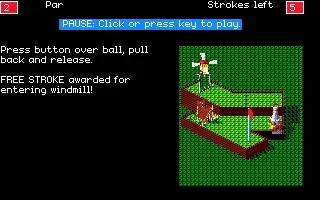
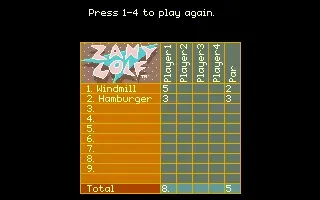
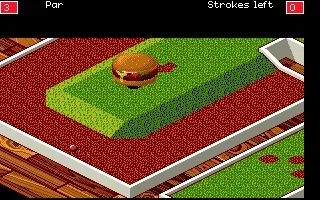
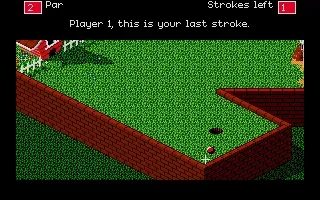
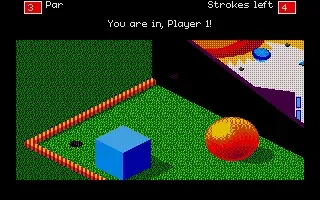
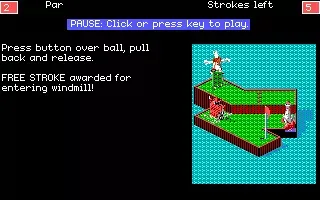
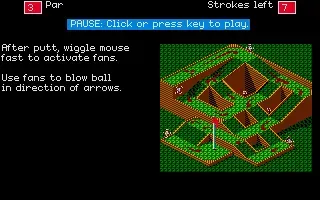
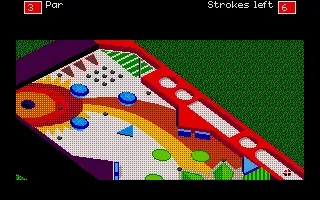
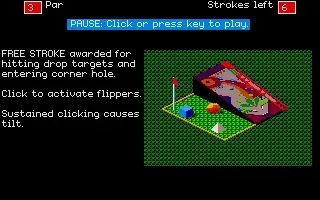
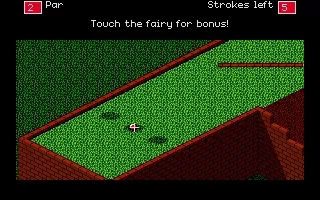
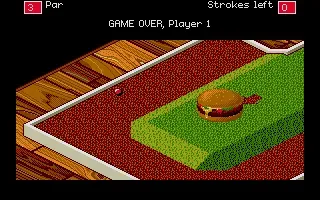
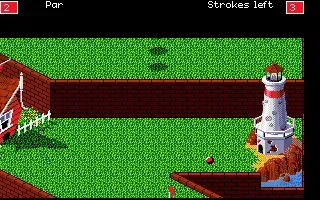
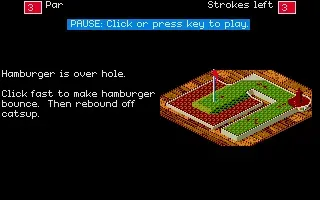
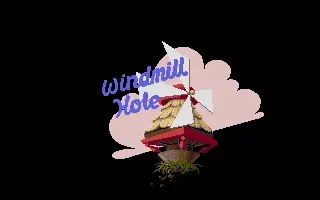
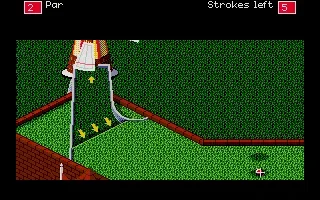
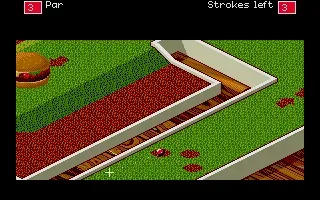
On DOS, Will Harvey’s Zany Golf plays as a physics-based, arcade-oriented sports game centered on miniature golf rather than full-course simulation. Players control their shots by “pulling back” from the ball to set power and direction, then releasing, a mechanic that feels closer to a physics puzzle than a traditional golf sim. Each hole functions as a self-contained puzzle with its own gimmick: a pinball-themed table with flippers and bumpers, moving platforms and magic carpets that let you steer the ball mid-flight, or whimsical constructions guarded by animated objects like burgers. Limited stroke counts, hidden bonuses and time-based challenges add light strategic depth and replay value beyond merely reaching the cup.
The DOS version is built around EGA-era PC graphics, rendering isometric courses with crisp, colorful tiles and clearly readable obstacles within the constraints of 16-color displays. Mouse input is supported and generally preferred for precise control, though DOS keyboard input can be used to finely calibrate shot strength on repeat play. Audio on DOS is simpler than on the Apple IIGS original, which was often praised for its rich sound, but the PC port still delivers distinctive, catchy tunes and sound effects that underline the game’s quirky, carnival-like tone. Performance on faster PCs can be overly brisk, leading some players to use slowdown utilities to approximate the pacing of late-1980s hardware.
Collector’s Value & Rarity
As a late-1980s PC release from a major publisher, the original DOS edition of Will Harvey’s Zany Golf is not among the rarest computer games of its era, but complete boxed copies have become steadily harder to find in top condition. The title sits in a middle ground for collectors: it is well-remembered and often nostalgically cited in discussions of early mini-golf and physics-based puzzlers, yet it does not typically command the very highest prices reserved for landmark RPGs, adventure games or limited-run PC titles of the same period.
For dedicated collectors, value tends to concentrate in fully preserved retail packages featuring the original Electronic Arts branding, intact box art, manuals and any platform-specific inserts or registration cards. Differences between regional PC releases are generally minimal from a content standpoint, so desirability is driven more by condition than by territory. Later rights handling and digital-era rereleases associated with Piko Interactive LLC have made the game easier to access for play, but these modern distributions are distinct from the original DOS physical edition that remains the primary focus for vintage PC collection and archival efforts.