

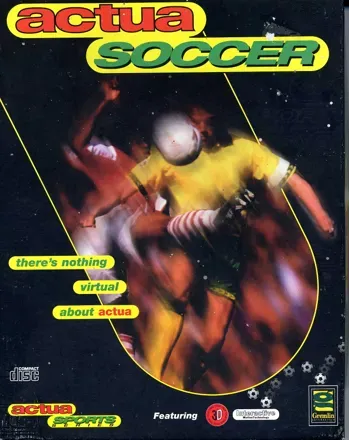
Historical Context & Trivia
VR Soccer ’96 is a 1995 DOS-era football title from Gremlin Interactive Limited that later circulated under alternate naming in different regions, including Actua Soccer and related release labels tied to Interplay and other publishers. It arrived during the mid-1990s shift toward fully 3D sports presentation, when developers were pushing football games beyond sprite-based visuals into polygonal broadcast-style simulation.
The game is closely associated with the early Actua Sports lineage, and surviving release records show that its branding and publishing trail varied across territories, with Gremlin Interactive handling development and Interplay appearing on at least one widely documented release. That multi-label distribution reflects how prominent European sports titles often moved through different licensors, distributors, and regional identities in the DOS market.
Gameplay & Technical Features
As a Sports title, VR Soccer ’96 focuses on real-time football matches with direct player control, passing, shooting, tactical positioning, and multiple camera viewpoints. Documentation for the game describes a 3D soccer structure built around motion-captured animation, international squads, and commentary-driven presentation, aiming for a simulation style rather than an arcade-only feel.
On DOS, the game belonged to the early wave of PC sports releases that used software-rendered 3D models and emulator-friendly distribution today. Its technical identity is tied to the period’s ambition: fuller camera control, broadcast framing, and audiovisual presentation that relied on the PC’s ability to handle larger data, more animation states, and sampled commentary through contemporary sound hardware.
Collector’s Value & Rarity
VR Soccer ’96 is best treated as a mid-tier collectible rather than a top-shelf rarity, with value driven more by complete condition, regional packaging, and nostalgia for early 3D football than by extreme scarcity. Preservation is strongest through digital re-releases and archival availability, which means original physical copies matter mainly to dedicated DOS collectors and series completists.
Collector interest can vary by edition because the game appeared under different titles and publisher arrangements, so boxes, manuals, and regional labels may differ across markets. Physical collateral such as original inserts, registration materials, and release-specific branding is especially relevant for authentication, since the title’s distribution history is more fragmented than a single-region sports release.