

Historical Context & Trivia
RollerCoaster Tycoon (1999) is a landmark construction and management simulation for Windows, widely recognized as the first entry in the long-running series and one of the defining park-sim games of its era. It was released for Windows in North America in March 1999 and in Europe in April 1999, with later console and reissue versions appearing afterward.
The game was created by Chris Sawyer and published by Hasbro Interactive under the MicroProse brand, with later publishing arrangements varying by release and region. Its development is especially notable because Sawyer wrote the core code largely in assembly language, while the visuals were handled by Simon Foster and the music by Allister Brimble.
Gameplay & Technical Features
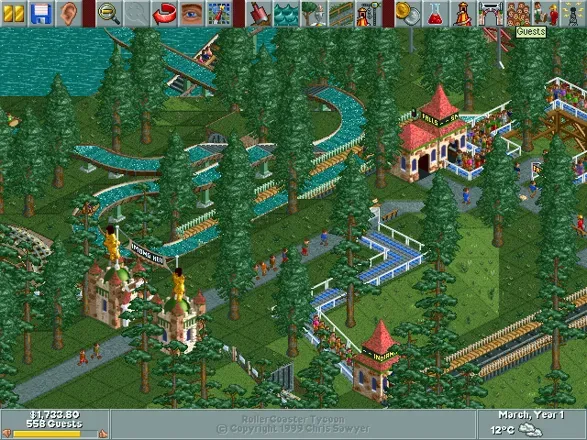
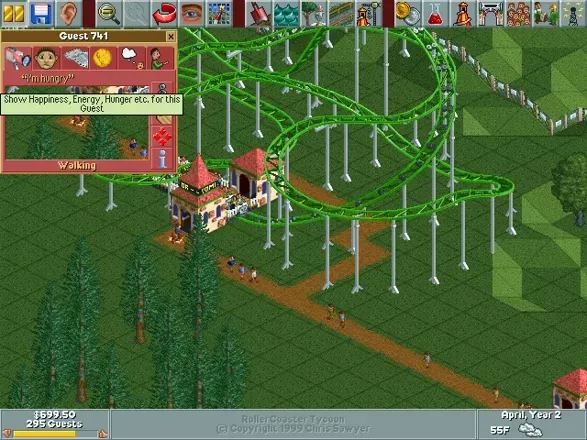
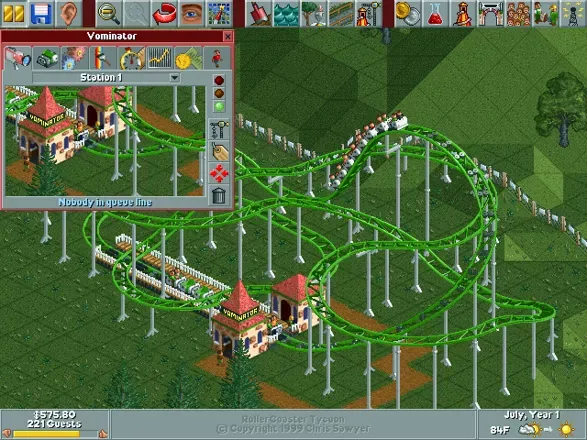
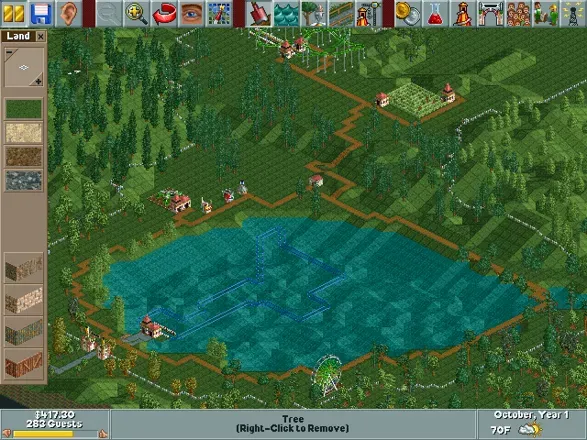
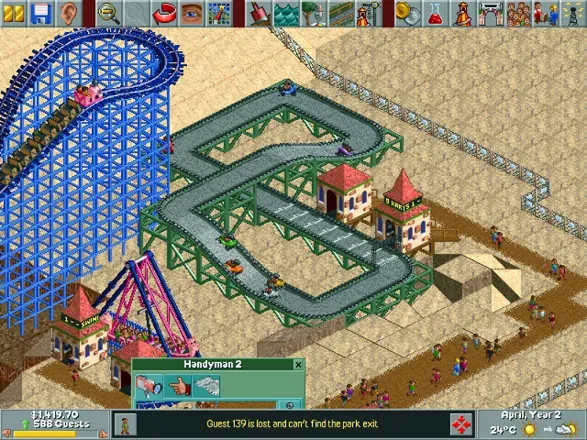
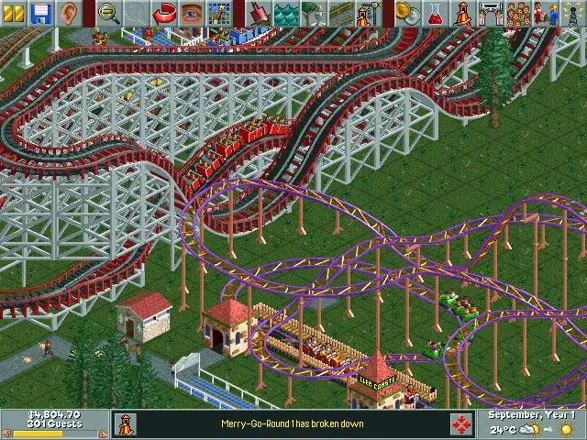
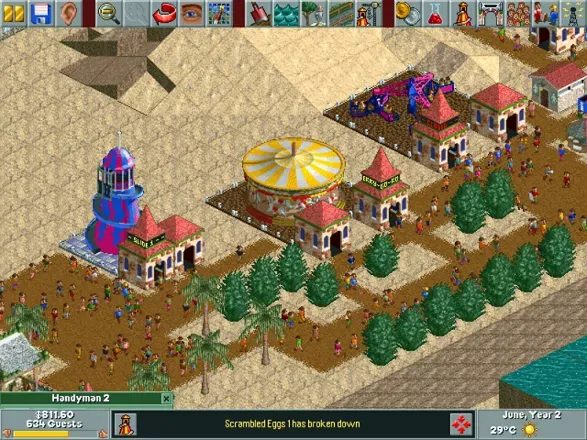
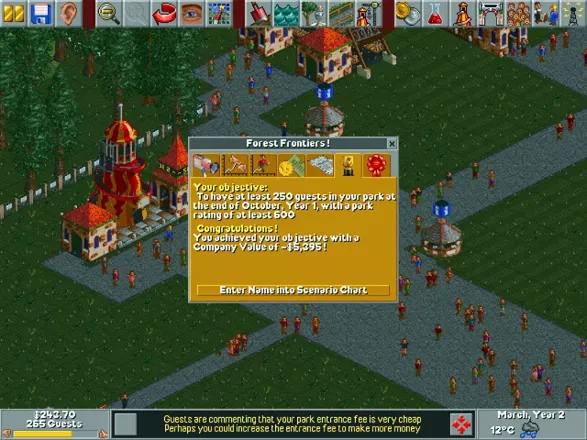
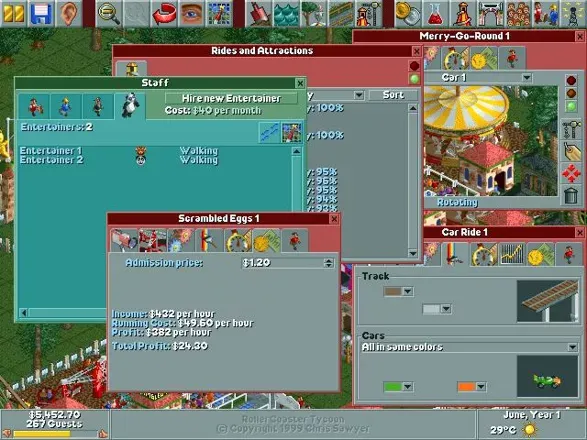
As a simulation, the game centers on designing and operating an amusement park, balancing coaster construction, guest satisfaction, finances, park layout, and scenario objectives. Its structure emphasizes optimization and management as much as creativity, which helped establish its enduring appeal among strategy and simulation players.
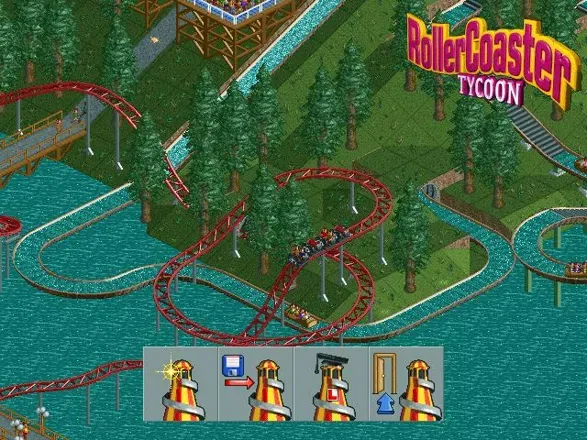
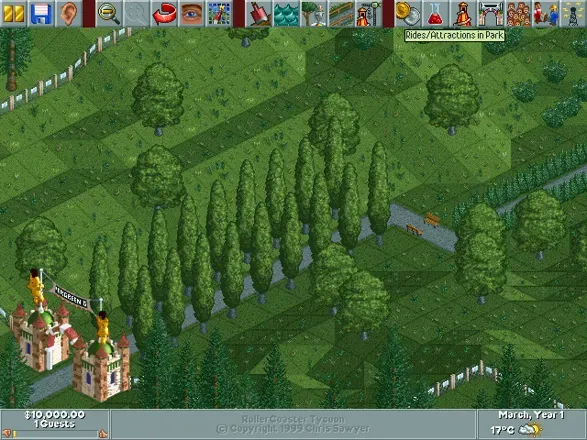
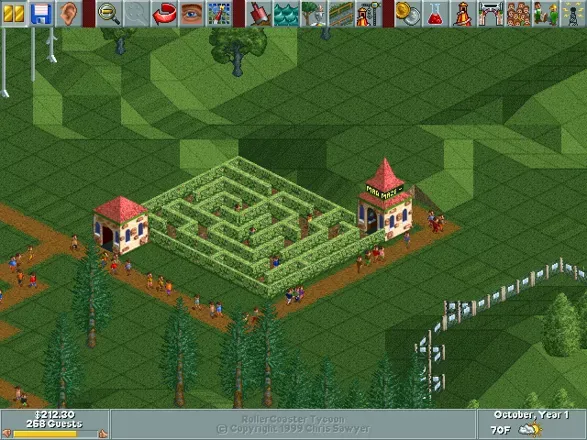
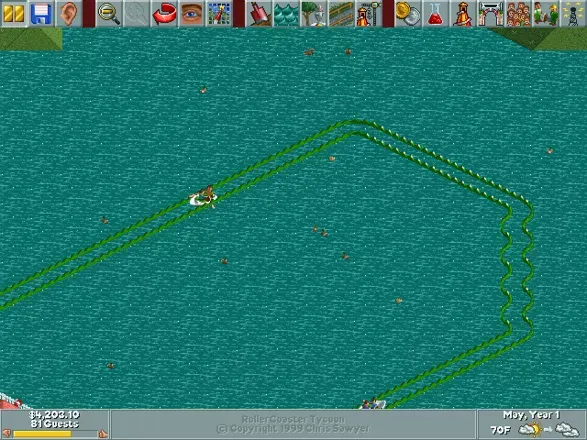
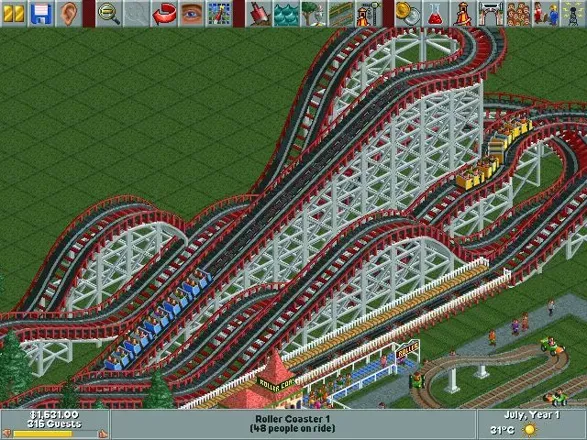
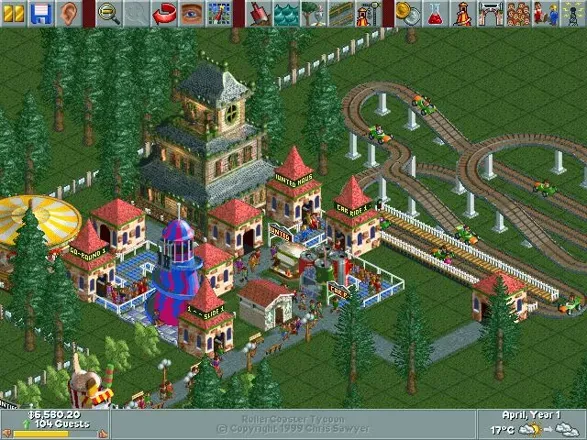
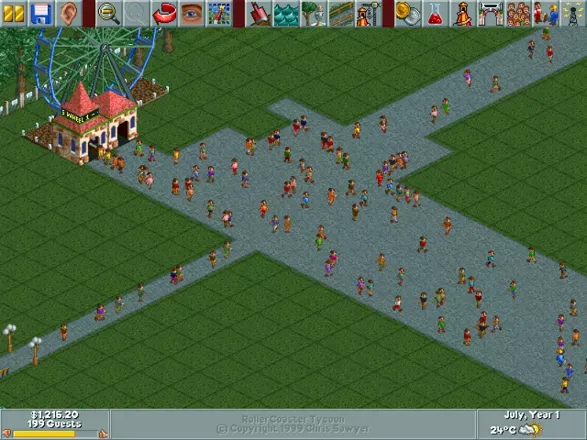
On Windows, the game is remembered for unusually efficient technical execution: the engine was built to run well on modest hardware, and modern analysis of its code has highlighted how carefully its performance was engineered. The presentation uses an isometric viewpoint with detailed sprite-based visuals, and the audio framework is anchored by a distinctive theme soundtrack and compact asset formats that supported the game’s low system requirements.
Collector’s Value & Rarity
The original 1999 release is a major preservation title rather than a rare obscurity, so its market value is usually driven more by condition, edition, and completeness than by extreme scarcity. Later re-releases and digital editions have made the game broadly accessible, but original retail copies remain sought after by collectors of classic PC simulation software.
Collectors generally place the highest value on complete boxed sets with the manual and original inserts, especially regional releases and any packaging tied to the early MicroProse or Hasbro Interactive distribution era. Deluxe and later editions exist, but for historical collecting purposes, original Windows-era collateral is the most desirable form of the game.