
Overview
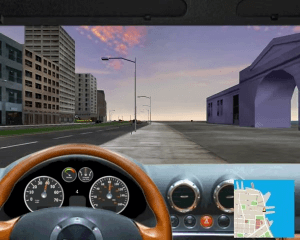
Midtown Madness 2 is an open-world racing video game developed by Angel Studios, Inc., released in 2000. As the sequel to the original Midtown Madness, it brings back the chaotic urban racing experience with two new cities: London and San Francisco.
Gameplay Features
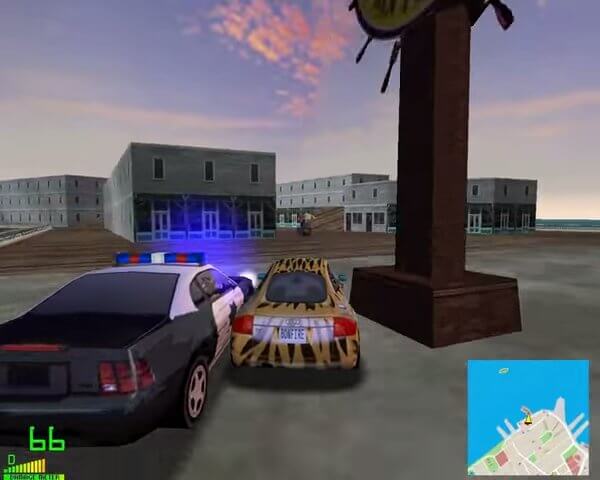
The game offers players a choice of driving through the bustling streets of these cities in a variety of vehicles, including sports cars, buses, and even police cars. The open-world design allows players to explore at their leisure or engage in race challenges and pursuits.
Key modes include Cruise, Blitz, Checkpoint, and Circuit races, each providing different challenges and objectives. The game is noted for its realistic traffic and pedestrian AI, which adds an extra layer of difficulty and immersion to the experience.
Notable Elements
- Enhanced graphics and more detailed environments compared to its predecessor.
- Introduction of a driving school mode where players can undertake various missions to improve their skills.
- Day and night cycles, affecting visibility and strategy during races.
- Multiplayer support, allowing for competitive racing against friends over a network.
Historic Significance
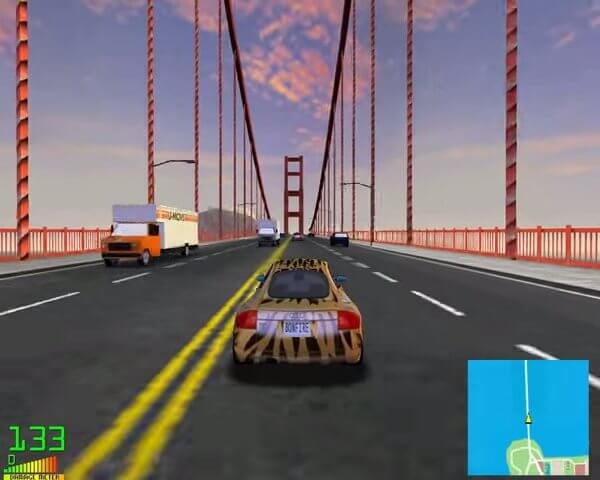
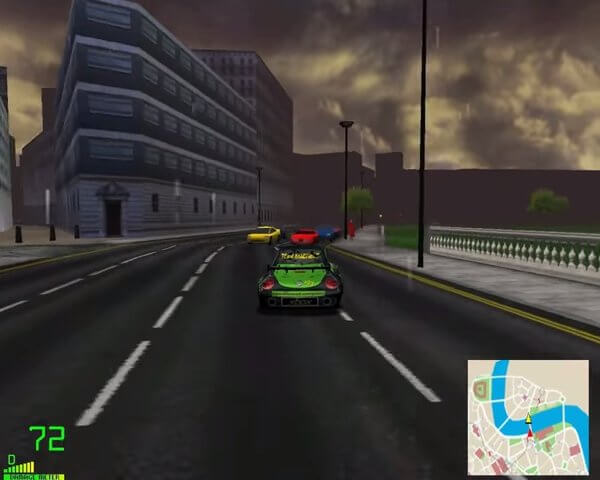
At the time of its release, Midtown Madness 2 received praise for its innovative open-world racing mechanics and its bold attempt to recreate real-world city layouts. The San Francisco and London maps were celebrated for their distinct architectural and cultural details, providing a diverse gaming experience. Its contribution to the racing genre lies in its early adoption of city-based racing and open-world exploration, concepts that have since become staples in modern racing games.
Development Facts
Developed by Angel Studios, Inc., which later became Rockstar San Diego, the game highlighted the studio’s proficiency in creating immersive 3D environments and laid the groundwork for its later, more famous series, such as Midnight Club and Red Dead series. The collaboration with Microsoft Game Studios for the PC platform allowed it to leverage cutting-edge technology of the era, resulting in a well-received gaming experience by the community.