
Overview
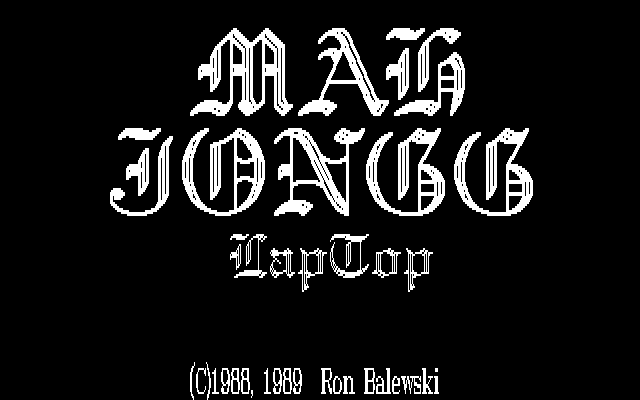
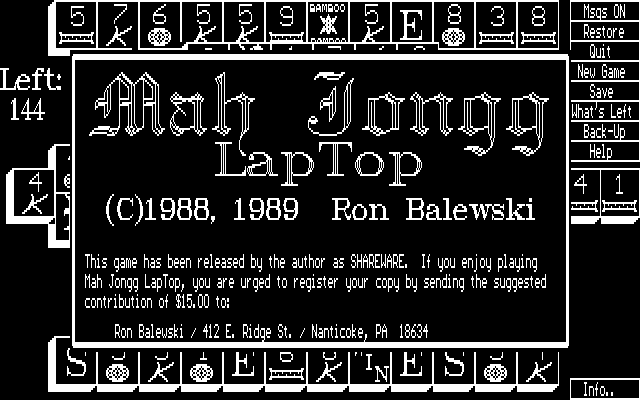
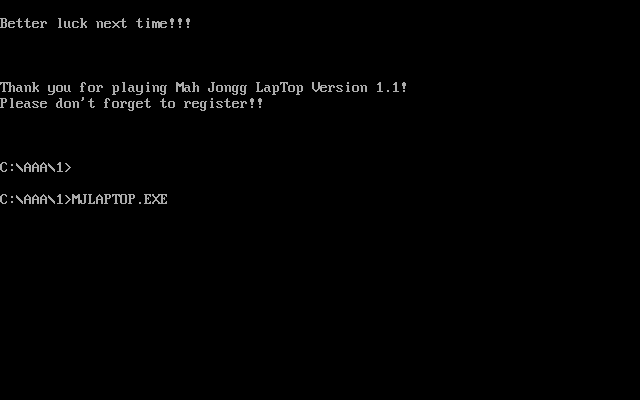
Released in 1989, this version of Mah Jongg provides players with a digital adaptation of the classic Chinese tile-matching game. The game was designed to be played on laptops, making it one of the early adaptations aimed at utilizing the portability of personal computers of that era.
Gameplay
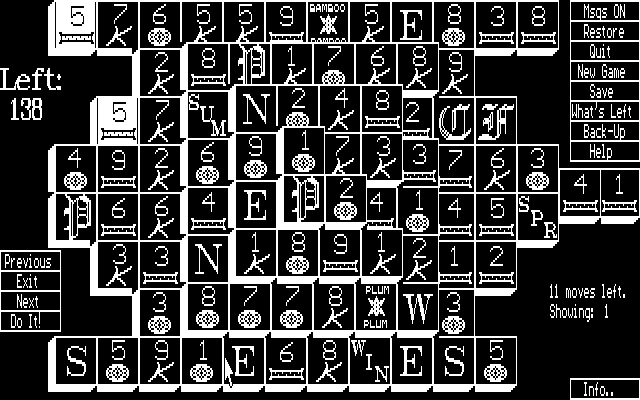
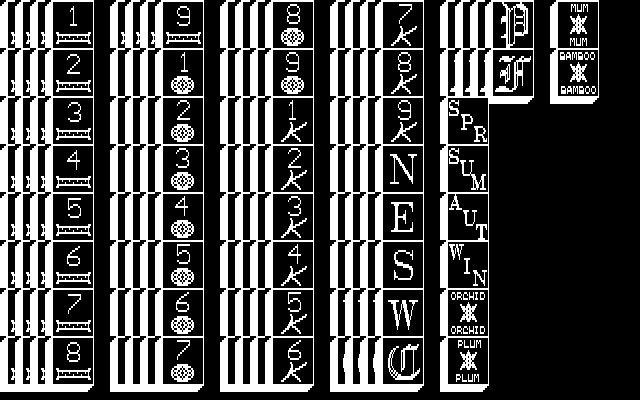
The objective of the game remains true to its roots: players must match pairs of identical tiles to clear the board. This version includes various board layouts, adding a level of challenge and replayability. As in the traditional game, the tiles feature Chinese symbols and characters, which fans of the genre will recognize immediately.
Development and Features
Although not particularly revolutionary by today’s standards, this digital version was notable for its accessibility and ease of use on portable devices. The game managed to capture the essence of the board game while allowing users the flexibility of playing anywhere. It provided an intuitive interface for the time, using keyboard commands to facilitate tile selection and management.
Historical Context
During the late 1980s, portable computing was still in its infancy. The development of the game for laptops was significant during this era, as it demonstrated the growing interest in creating software specifically tailored for these emerging devices. This contributed to the popularization of casual gaming on laptops, paving the way for future innovations in digital gaming.
Conclusion
This early adaptation of the traditional Mah Jongg matched well with technological advances at the time and provided enthusiasts with an engaging way to enjoy tile-matching puzzles on the go. While it may not stand out in the history of gaming as a pivotal moment, it remains a charming example of how early developers sought to bring classic games into the digital age.