

Summer, 1980.
Arcades pulsed with neon and sweat while Bernie “Elmer” McNeil was deep in the final stages of developing Berzerk, the upcoming shooter for the Atari 2600 and arcade cabinets. The game was born to be simple—almost barebones: black, white… and a cheap trick. A colored overlay slapped onto the screen to fool players into thinking they were seeing real tech, instead of cardboard and bugs.
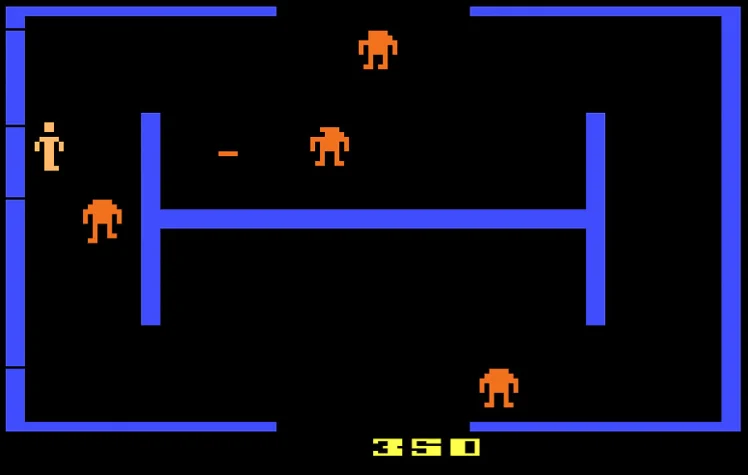
Then, just weeks before summer, came the “brilliant” decision from the tech crew: ditch the optical band-aid—go full color. A four-bit palette, an abrupt and painful leap beyond the original limits. Not for artistic vision, not from creative drive… but because a monochrome cabinet would look like a corpse in the gaudy carnival of competing arcades.
It was a last-second choice, a kind of digital cosmetic surgery before shoving the patient out onto the market floor. More paint than blood. But it was enough to make Berzerk look alive—at least alive enough to squeeze a few more quarters from the crowd.