










Historical Context & Trivia
Putt-Putt Enters the Race was released in 1999 as part of Humongous Entertainment’s long-running children’s adventure line, a series that helped define the studio’s approachable point-and-click style for younger players. It sits within the broader Putt-Putt franchise, which was already well established by the late 1990s and known for combining preschool-friendly humor with simple exploration and light puzzle-solving.
Humongous Entertainment developed and published the game for Microsoft Windows and Macintosh, and later releases and reissues expanded its availability across digital storefronts and regional publishers. The title is widely recognized as a kid-oriented edutainment adventure rather than a mainstream blockbuster, but it remains a notable example of the studio’s polished, character-driven design philosophy.
Gameplay & Technical Features
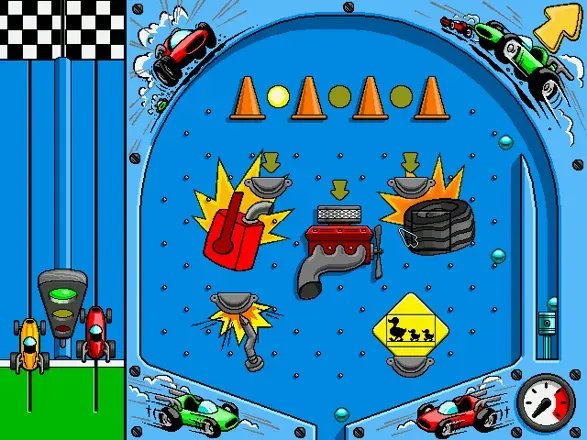
This is a children’s point-and-click adventure built around navigation, object interaction, and gentle puzzle progression. Players guide Putt-Putt through tasks tied to the racing theme, collecting items and solving small sequencing challenges that are designed to be readable and forgiving for younger audiences.
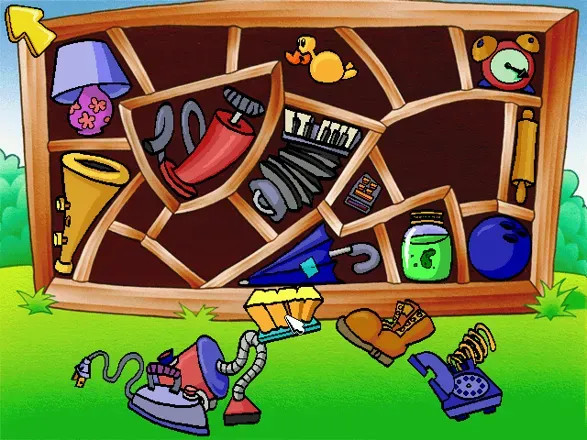
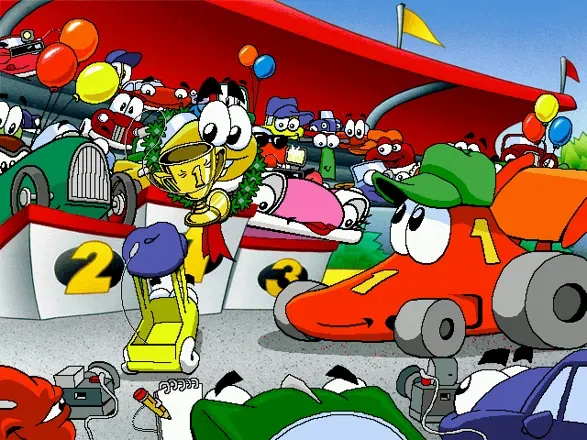
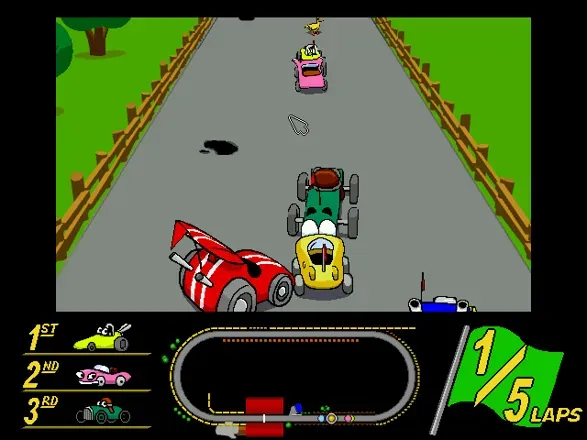
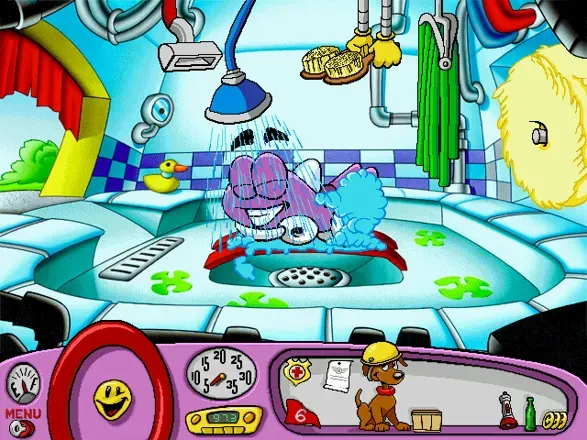
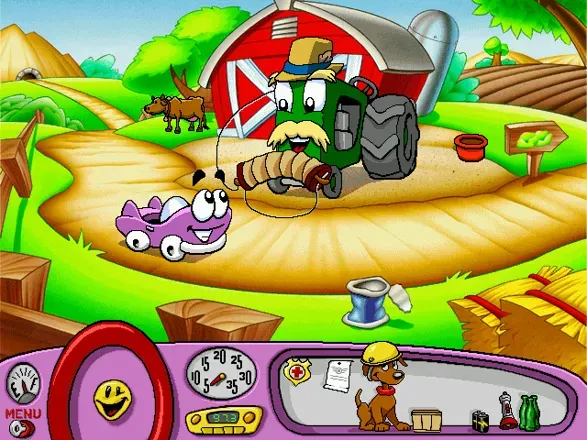
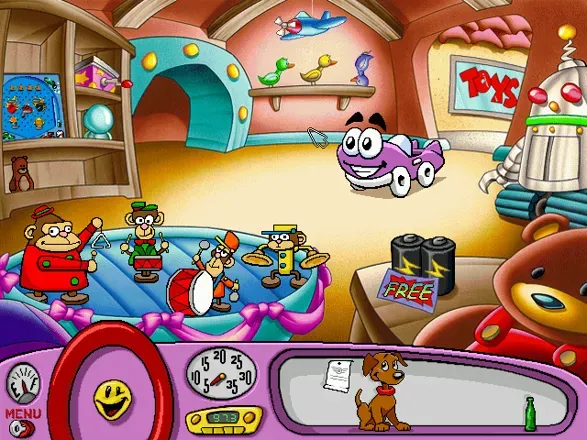
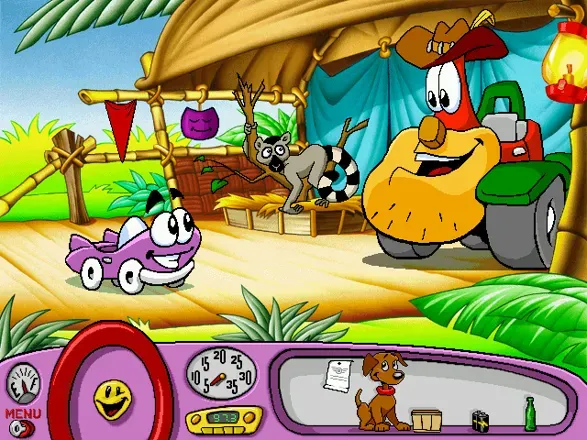
On Windows 16-bit, the game reflects the late-1990s Humongous formula with colorful 2D cartoon presentation, digitized character animation, and a highly mouse-driven interface. The audiovisual style emphasizes bright, simple scenes, expressive sound effects, and voice-assisted feedback, all of which supported the studio’s focus on accessibility on home PC hardware.
Collector’s Value & Rarity
Physical copies are generally not considered rare in the broader retro market, but condition matters: complete boxed sets with inserts, manuals, and discs tend to be more desirable than loose software. Market value is usually driven more by completeness and preservation quality than by scarcity alone.
Regional and later-reissue variants can differ through publisher branding and localization, with releases associated with Humongous Entertainment, Infogrames, Akella, Nightdive Studios, and Tommo appearing across different editions and re-releases. For collectors, the most useful physical collateral is the original box art, manual, and any age-specific packaging that identifies the release window and platform.