



Game Overview
Released in 1985, this unique board game seeks to simulate the socio-economic and political structures associated with class dynamics. The gameplay pits players against each other as they navigate a competitive environment where the goal is to champion their social class — whether it’s advancing workers’ rights or maintaining corporate control.
Thematic Elements
The game is deeply rooted in Marxist philosophy, aiming to provide insight into the power struggles between different classes. Players take on roles that represent various social classes, and the game’s mechanics encourage strategic thinking to either maintain the status quo or redistribute power among the proletariat.
Gameplay Mechanics
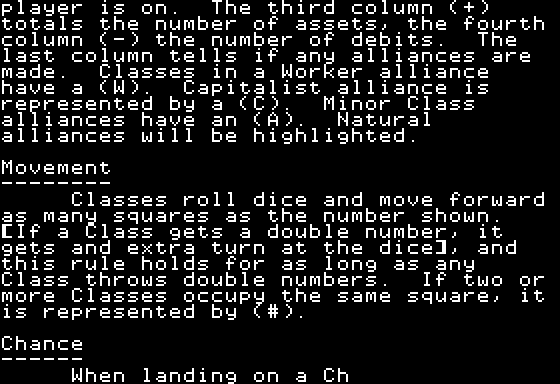
The game mirrors a traditional board game format where players move around the board, gaining or losing resources and influence depending on the outcomes of their strategic decisions. Key decision points involve alliances and conflicts, reflecting real-world scenarios faced by different social classes.
Historical Context and Cultural Impact
Created during a period of heightened political awareness in the mid-1980s, the game became a cultural artifact that sparked conversations about socio-economic issues. Its release coincided with an era of political activism and discourse around economic inequality, making it a subject of interest among educators and political enthusiasts.
Educational Value
The board game is often used in educational settings to introduce players to basic concepts of class struggle and Marxist theory. Its didactic nature has been appreciated by teachers and sociologists as a tool for simulating the intricacies of economic and social dynamics.