



“`html
About the Game
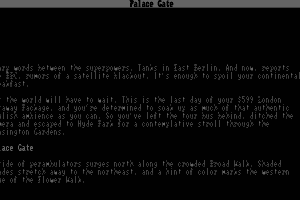
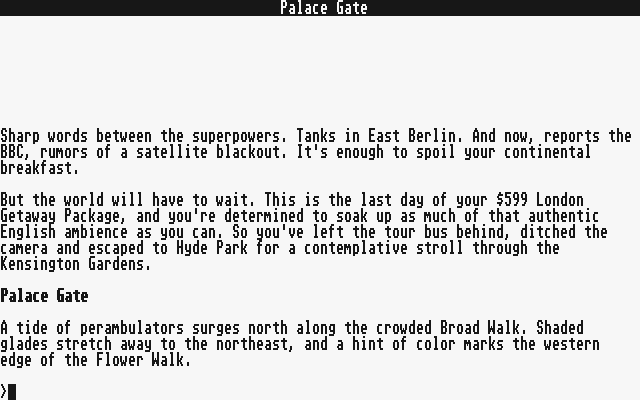
Trinity is a text-based interactive fiction (IF) game that was released in 1986 by Infocom, Inc. Known for its richly descriptive prose and intricate plot, the game is set against the backdrop of a surreal and seemingly fantastical world that intersects with key historical moments involving nuclear weaponry.
Gameplay Mechanics
The game follows the player through a series of worlds linked by gates, known as “trines,” with each world representing a significant moment in the history of nuclear weapons. Players must solve complex puzzles and interact with various characters to progress. The narrative is heavily driven by exploration and logical reasoning as players aim to understand and possibly alter the course of events.
Significance and Design
Trinity is well-regarded for its narrative depth and the way it intertwines a fictional storyline with real historical events. It reflects on the nature of technology and humanity by incorporating the moral and ethical dilemmas associated with nuclear proliferation. This coupling of fantasy and history allows the game to explore heavy themes within the confines of an interactive fiction structure.
Development and Legacy
Developed by Infocom during a period known as the “Golden Age” of interactive fiction, Trinity stands out for its thoughtful narrative and high-quality writing. Infocom was known for creating complex and engaging story-driven games that challenged players intellectually while exploring expansive themes. This game is a part of that legacy, offering a profound experience that encourages reflection on real-world issues.
“`