

Historical Context & Trivia
Wing Commander Academy (1993) is a standalone MS-DOS spin-off from the Wing Commander universe, built around combat drills and custom scenarios rather than a full narrative campaign. It was positioned as a mission-focused companion to the main series and was sold as an accessible, lower-priced boxed release in the same era as other Origin space sims.
Origin Systems developed the game and Electronic Arts handled publication/distribution, continuing the publisher’s role in bringing the franchise to the PC market. The game is widely documented as drawing heavily on the technology and assets of Wing Commander II, with its design centered on replayable training-style engagements and a mission editor.
Gameplay & Technical Features
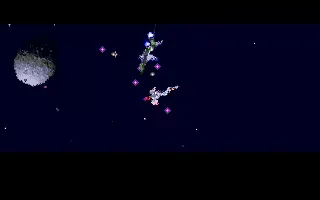
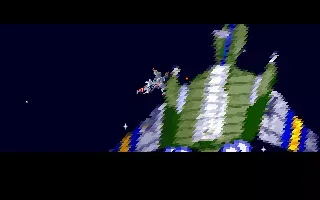
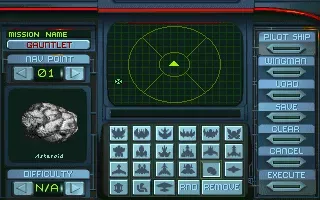
Wing Commander Academy is an action space combat game built around fast dogfights, selectable craft, wingmen, and user-created missions. Unlike the mainline entries, it does not rely on a story-driven structure; instead, it emphasizes scenario building, repeatable battles, and immediate combat practice within the familiar sci-fi setting.
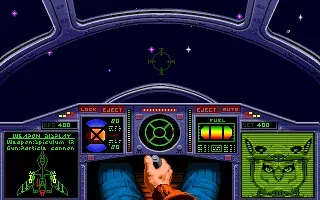
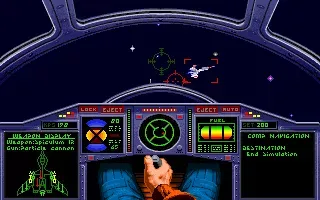
On DOS, the game uses a visual and control framework closely related to Wing Commander II, presenting cockpit-style first-person combat in 256-color VGA at 320×200. It also supports digitized speech and was distributed on floppy disks with an installation process intended to move the game onto a hard drive, reflecting typical early-1990s PC design constraints.
Collector’s Value & Rarity
Wing Commander Academy is not generally considered a rare high-value PC collectible, but complete boxed copies have practical appeal because the game was sold as a distinct retail product rather than only as a magazine demo or add-on. Its desirability is driven more by Wing Commander franchise interest, complete contents, and preservation quality than by extreme scarcity.
Collector interest is strongest when the package includes the original 3.5-inch floppy disks, manual, and any original printed inserts or distributor materials. Because it was released as a full retail DOS title, regional packaging and completeness matter more than special edition variants, and intact copies with all physical collateral tend to command the best attention from series collectors.