


Overview
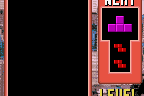
Released in 1989 for the Nintendo Game Boy, this game quickly became a cultural phenomenon. Originally designed by Alexey Pajitnov, it was a perfect match for the portable system, taking advantage of its monochrome display and simple controls.
Gameplay
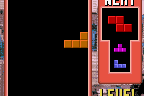
The game challenges players to fit falling pieces, known as Tetrominoes, into lines without leaving gaps. As the player advances, the speed of falling pieces increases, demanding quicker reflexes and more strategic planning. Its simple yet addictive nature has made it a timeless classic.
Historical Significance
Profoundly significant, it was pivotal in establishing handheld gaming. The game’s widespread appeal was reinforced by its bundling with the Game Boy, which contributed to the device’s immense popularity. It demonstrated that intricate graphics were not necessary to create an engaging gaming experience.
Development Trivia
Originally developed in the Soviet Union, the game’s rights became an intricate web of legal and licensing battles involving companies like Nintendo and Atari. Despite the complexities, its success paved the way for future developments in the video game industry.
Legacy
Regarded as one of the greatest video games of all time, its influence extends beyond gaming, often cited in discussions about puzzle design and game mechanics. Its presence remains pervasive with adaptations across multiple platforms and its ongoing influence is evident in contemporary game design.