



Historical Context & Trivia
Reactor is a real 1982 arcade action game from Gottlieb, and the data you provided is only partially correct for the Atari 8-bit entry: the best-supported public record points to an Atari 2600 version released in 1983, while the Atari 8-bit listing appears in secondary game indexes as a 1983 Aim Software title rather than a widely documented mainstream release.
The strongest verified historical context belongs to the original arcade game, which was designed by Tim Skelly and is notable for being the first arcade title to credit its developer on the title screen; that legacy is tied to the arcade original, not to the disputed Atari 8-bit adaptation. Publicly available sources do not clearly support the supplied publisher name Aim Software Distribution, Inc. or the generic developer label expert designers as authoritative credits for a well-documented retail release.
Gameplay & Technical Features
Reactor is an Action game built around maneuvering a small craft inside a hazardous reactor chamber, destroying particles, avoiding the kill wall, and using control rods to prevent meltdown. The core loop is about spatial control, collision management, and risk balancing rather than direct shooting alone.
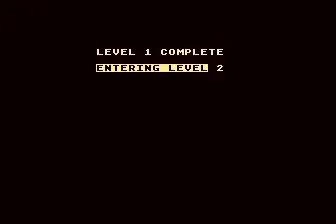
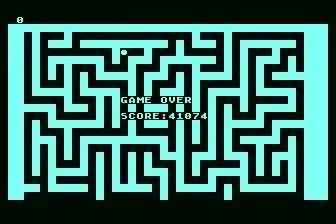
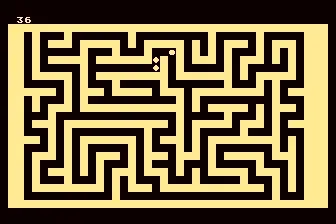
On Atari 8-bit hardware, a title of this type would typically require a simplified adaptation of the arcade layout, with reduced sprite complexity and audio compared with the original coin-op version. Because the surviving documentation for the specific Atari 8-bit edition is thin, only the broader platform fit can be stated confidently: a compact action game structure, single-screen play, and graphics scaled to the capabilities of the Atari home-computer line.
Collector’s Value & Rarity
The documented market history for Reactor is much stronger for the arcade original and the Atari 2600 port than for the Atari 8-bit version, so the 8-bit release should be treated as a comparatively obscure preservation item unless a physical copy can be verified. In collector terms, that usually means low visibility, uncertain print-run data, and a heavy dependence on box or catalog evidence rather than broad mainstream demand.
For a title in this category, the most important surviving materials would be the original box, manual, and any publisher labeling that confirms the exact platform and credit line. If the Atari 8-bit edition exists as listed, regional packaging differences and distributor branding would be the key elements to document, but the present record does not support more specific claims without a verified scan or catalog entry.