

Historical Context & Trivia
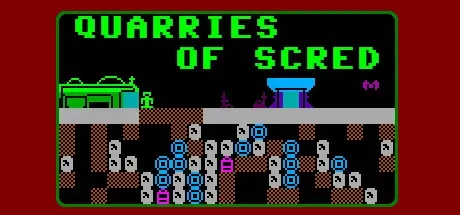
Quarries of Scred is a 2014 retro-inspired Action title that deliberately channels the brutal mechanics of classic arcade milestones like Boulder Dash and Dig Dug for the modern Windows era. The game positions itself as an unapologetically difficult arcade experience where players risk their bounty to progress, embodying a “classic gaming” theme that prioritizes high-stakes risk over narrative comfort.
Developed and published by Hammerspace Games, the title represents a niche effort to bridge 1980s arcade DNA with 21st-century platform accessibility. While the developer name appears in other contexts on itch.io under the author KaiClavier for a 2018 fighting game, Quarries of Scred remains distinct as the specific 2014 arcade action release attributed to the Hammerspace Games brand.
Gameplay & Technical Features
As an Action game rooted in the classic gaming sub-genre, the core mechanics revolve around the frantic, puzzle-like navigation found in Boulder Dash, requiring players to dodge falling debris and enemies while collecting resources. The gameplay is described as “brutal,” emphasizing a retro arcade philosophy where survival depends on precise movement and the willingness to lose progress to gain a higher bounty.
The technical adaptation targets the Windows ecosystem, delivering a retro-inspired visual and audio framework that mimics the constraints and intensity of 1980s arcade hardware without modern narrative distractions. The design intent is explicitly to test player endurance, stripping away safety nets to recreate the “see just how far you’ll go” pressure of original arcade cabinets.
Collector’s Value & Rarity
As a 2014 release from a smaller developer, Quarries of Scred occupies a niche position in the market, likely existing primarily as a digital download rather than a mass-produced physical product. Its scarcity is tied to its status as a specific homage to Boulder Dash and Dig Dug, appealing to collectors of retro-arcade revivals rather than mainstream blockbuster enthusiasts.
There is no widely documented evidence of regional packaging variants or unique physical collateral such as manuals for this title, suggesting its preservation relies on digital archives and community walkthroughs. The game’s value for collectors is derived from its faithful execution of the “brutal” arcade formula and its role as a specific 2014 entry in the classic gaming revival trend.