

Historical Context & Trivia
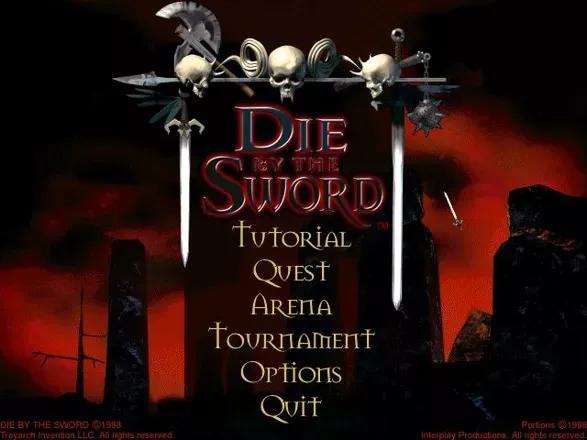
Die by the Sword was released in 1998 as a third-person fantasy action game built around a distinctive sword-fighting system that set it apart from more conventional hack-and-slash releases of the period. Review coverage from the time consistently highlighted its unusual combat model and its high difficulty, which helped it stand out even when the overall premise was relatively standard medieval rescue fare.
The game was developed by Treyarch Invention, LLC and associated in release materials with Interplay Entertainment, with later listings also reflecting Tantrum as the publishing label in some regions and Imagineer Co., Ltd. and UIG Entertainment GmbH tied to distribution. Contemporary and retrospective descriptions identify the player as the knight Enric, whose quest to rescue his kidnapped sweetheart gives the game its fantasy framework.
Gameplay & Technical Features
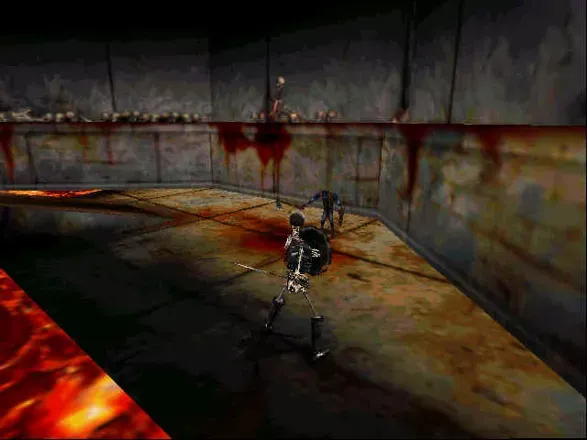
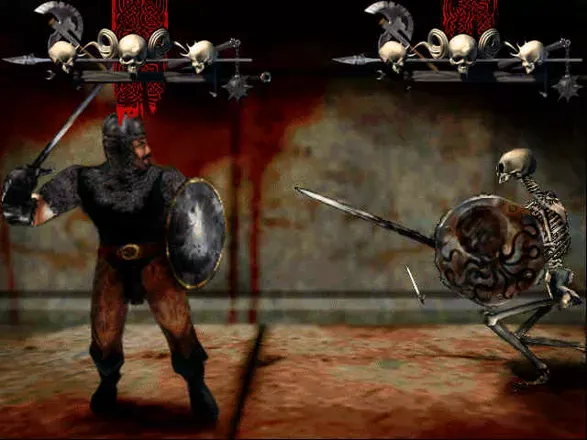
This action title is best known for its full sword control approach, where combat emphasizes direct weapon movement rather than simple button-pressed attack animations. That design made the game notably more technical than many 1990s fantasy action games, and sources describe it as allowing precise strikes, parries, limb damage, and even severing body parts during battle.
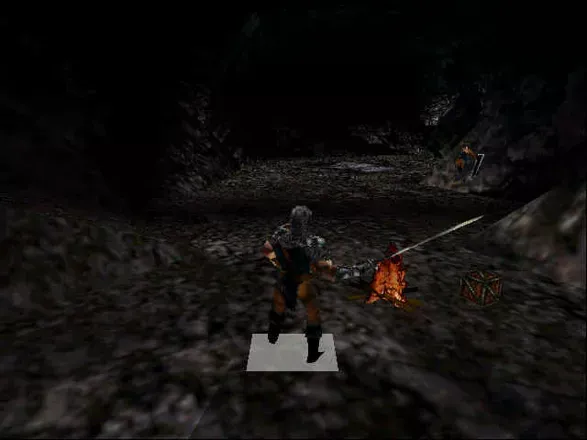
On Windows, the game used a 3D third-person presentation with a medieval fantasy visual style and a control scheme that included the mouse-driven combat system often cited as its signature feature. Coverage also notes additional modes such as arena-style fighting and multiplayer support in some versions, which broadened it beyond the main dungeon-crawl campaign.
Collector’s Value & Rarity
Die by the Sword is generally treated as a cult PC release rather than a mass-market blockbuster, and its collector appeal is tied more to its reputation and distinctive mechanics than to extreme scarcity. Retrospective commentary and storefront preservation listings suggest that copies remained obtainable in later years, but the game still attracts interest because of its unusual place in action-game history and its association with an early Treyarch title before the studio became widely known for later franchises.
For collectors, the most relevant physical and regional factors are the different publisher/distributor credits seen across territories, along with any surviving manuals, jewel case inserts, and expansion-related materials connected to Limb from Limb. The game’s documentation can vary by region, so complete boxed copies with matching inserts are typically more desirable than loose discs.