
Overview
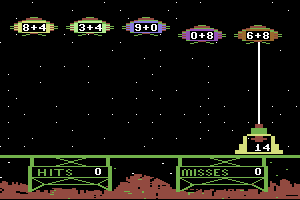
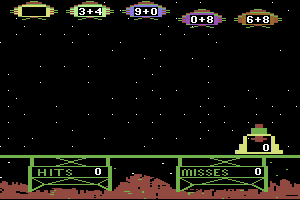
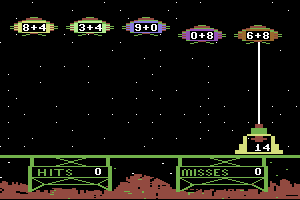
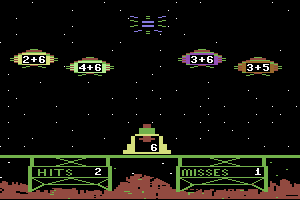
Alien Addition is an educational video game designed to make learning basic math skills entertaining and engaging for children. It was released during the early home computer gaming era, aiming to combine education with the thrill of video games. Players embark on an arithmetic adventure where they are tasked with solving addition problems to progress through the game.
Gameplay
Set in a sci-fi universe, the player encounters various extraterrestrial settings and creatures, all of which are centered around teaching addition. The objective is to solve math problems that are presented as obstacles or challenges by the game’s alien characters. The player’s success in solving these problems allows them to advance through levels, which gradually increase in difficulty to maintain an educational challenge.
Educational Value
This game was part of a larger movement in the 1980s aiming to use the emerging medium of video games as a tool for education. Designed specifically for children, it sought to leverage the engaging aspects of gaming to improve mathematical skills, particularly in a fun and interactive way. The game was suited for use both in educational settings and at home, providing a means for young learners to practice arithmetic in a context that encourages persisting and achieving goals.
Historical Context
During the 1980s, the trend of using video games as educational tools was gaining momentum. At a time when home computers were becoming more accessible, developers saw an opportunity to blend the excitement of video gaming with pedagogical goals. The game is an example of how developers of the time attempted to harness new technology to supplement traditional learning materials. It reflects a period in computing history when the potential of games extended beyond entertainment to facilitate learning and skill development.