


Overview
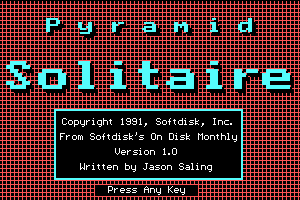
Pyramid Solitaire, released in 1991, is a single-player card game that challenges players to clear a pyramid of cards. This logical puzzle game involves strategic thinking and a good understanding of the classic principles of solitaire, making it a popular choice for card game enthusiasts.
Gameplay Mechanics
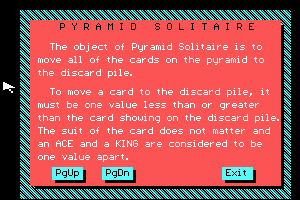
The game’s objective is to remove all cards from the pyramid by forming pairs that add up to 13 points. Cards from the pyramid and the draw pile can be paired to achieve this sum. The clever use of the draw pile is essential, as it can greatly affect the strategy and outcome of the game.
Historical Context
Released during the early 1990s, this version of the game became significant due to the increase in popularity of computer-based card games. Pyramid Solitaire’s engaging mechanics stood out in that era where digital card games began gaining traction among computer users worldwide.
Development and Impact
Though not extensively documented, the game’s development reflects the simplicity and effectiveness of early digital card games. It played a part in establishing the foundation that many modern solitaire games are built upon, demonstrating the timeless appeal of curated simplicity in game design.
Legacy
The game remains a favorite among solitaire variants and has seen numerous adaptations and versions for various platforms over the years. It continues to engage new generations of players with its simple yet challenging gameplay dynamic.