

Introduction
Nestled in the rich tapestry of classic computer games from the mid-1980s, this title is a digital rendition of the timeless board game, Othello. It offered early computer enthusiasts a chance to enjoy strategic gameplay on their personal computers, leveraging the processing power of contemporary machines.
Gameplay
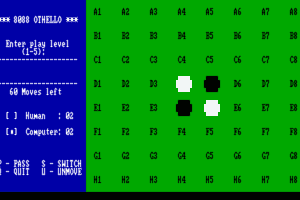
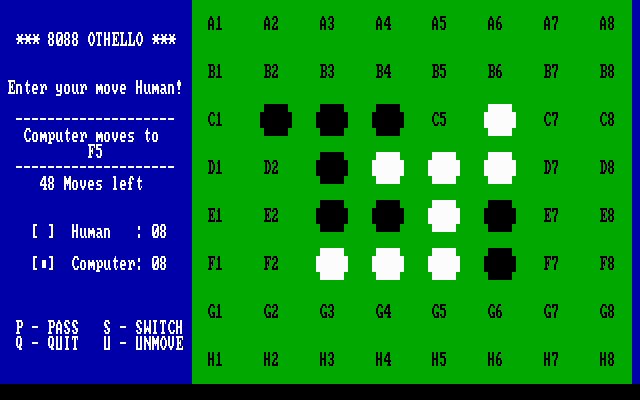
The game follows the traditional rules of Othello, with players each controlling a set of pieces, one black, the other white. The objective is to capture the majority of pieces on the board by the end of the game. This is achieved by outflanking the opponent’s pieces in lines, causing them to flip to the player’s color. The digital interface allows for simple movement and quick adaptation for those new to the game.
Technical Features
Designed for early PCs, the software was capable of running on machines with relatively modest hardware capabilities. Its graphics were simple, focusing on clarity and functionality, utilizing the standard monochrome display most personal computers used at the time. This minimalistic approach ensured compatibility across a wide array of systems.
Historical Significance
A product of its era, the game captured the spirit of experimentation and innovation that characterized early personal computing. It served as a bridge between traditional board games and the burgeoning world of digital entertainment, providing a template for the future development of board game adaptations.