

“`html
Overview
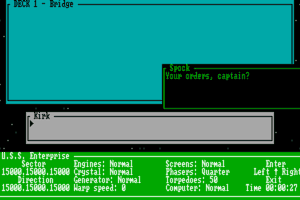
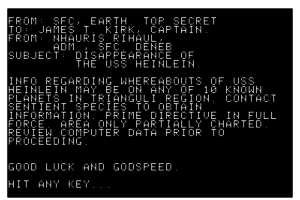
‘Star Trek: The Kobayashi Alternative’ is an adventure game released in 1985 by MicroMosaics Productions, Inc., and published by Simon & Schuster, Inc. The game was developed for the Apple II, Commodore 64, and DOS platforms. As an interactive fiction game, it distinguishes itself by focusing on storytelling and command input rather than graphical representation. Players interact with the game world by typing commands, a common feature of text-based adventures from the era.
Plot and Gameplay
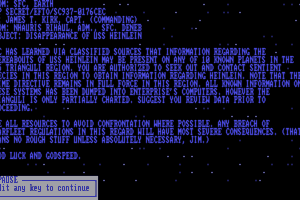
The game is set in the Star Trek universe during the original series timeline. Players take on the role of Captain James T. Kirk as they engage in a mission involving the infamous Kobayashi Maru test, a no-win scenario used to evaluate Starfleet cadets. Throughout the game, players must make strategic decisions, manage their crew, and interact with other Starfleet members and alien races to achieve their objectives.
The gameplay involves navigating the universe, solving puzzles, and conducting ship-to-ship communication and diplomacy. The game focuses heavily on narrative choices, allowing players to experience the complexities of command decisions in space exploration scenarios.
Development and Reception
‘Star Trek: The Kobayashi Alternative’ was notable for its attempt to bring the immersive storytelling of the ‘Star Trek’ series into an interactive medium. The inclusion of detailed text-based commands allowed for a deeper engagement with the narrative, which was a unique selling point at the time of its release. While the game may not have achieved widespread acclaim, it captured the spirit of ‘Star Trek’ for fans of interactive fiction.
Legacy
While not the most iconic of Star Trek games, ‘The Kobayashi Alternative’ holds a place in the history of interactive fiction due to its complex command system and commitment to storytelling. It reflects the period in gaming when narrative depth was being explored beyond simple graphics, paving the way for future advancements in video game design that incorporate deep storytelling elements.
“`