

Overview
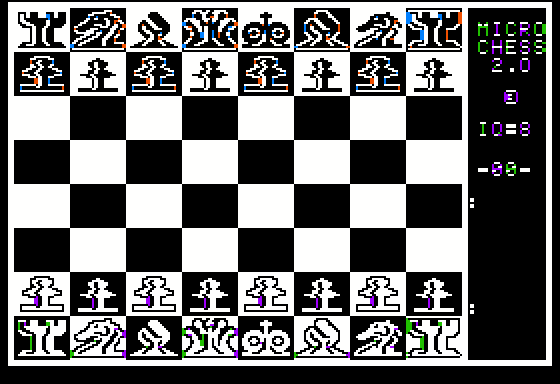
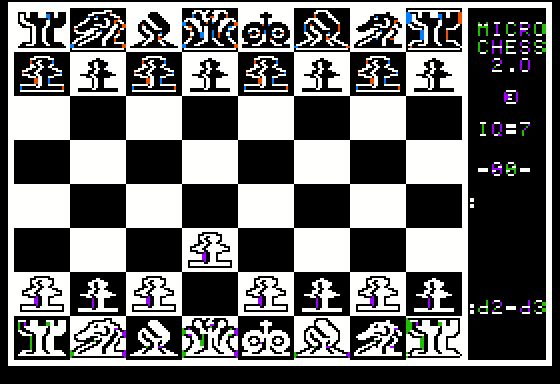
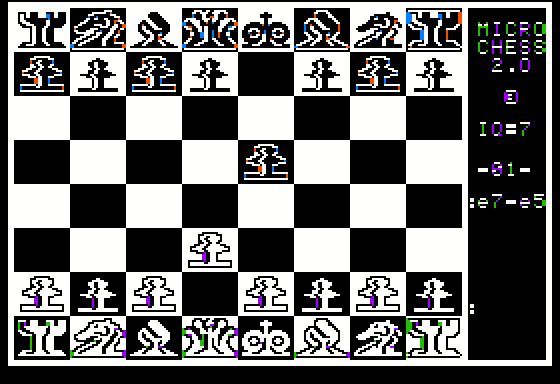
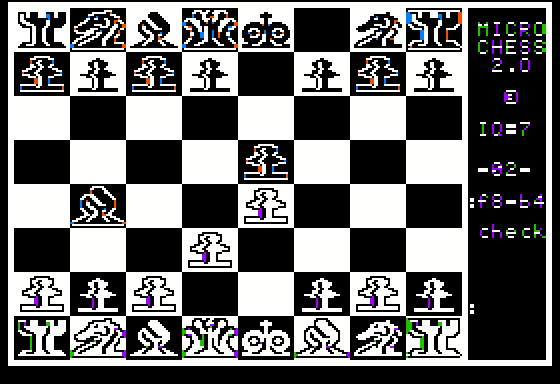
Microchess is a notable early computer chess game developed by Micro-Ware Ltd and released in 1978. Designed to bring the strategic depth of chess to the burgeoning realm of personal computing, it is regarded as one of the first chess software commercially available for microcomputers, highlighting the growing capabilities of home computing during the late 1970s.
Game Design and Features
The game was crafted to run on various microcomputer platforms that were emerging at the time, such as the Commodore PET, TRS-80, and Apple II. It was known for its relatively compact size, requiring limited memory space—a crucial design consideration given the hardware limitations of that era. The game offered a basic AI opponent, enabling even entry-level players to enjoy a reasonably competitive match. However, its simplicity might not have been challenging for advanced chess enthusiasts.
Historical Significance
The significance of this title lies in its role in democratizing access to chess in the digital realm. As one of the earliest examples of a chess program successfully converting the complexities of chess into a format playable by contemporary computer systems, it helped pave the way for future developments in both AI and gaming software.
Curiosities and Development
At the time of its release, Microchess was a novel way to experience chess, with developers having to creatively leverage the limited processing power and memory of personal computers of the period. This title contributed to enhancing the popularity of computer-based board games and underscored the potential for sophisticated game design within the constraints of early microcomputer technology.