

Historical Context & Trivia
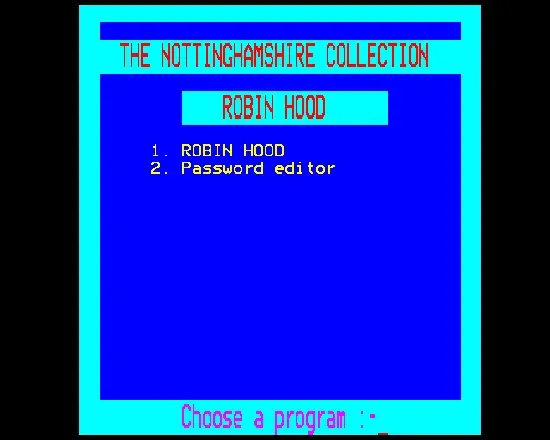
Robin Hood for the BBC Micro appears in the BBC Micro Games Archive as a 1984 educational title associated with the Nottinghamshire Schools Computer Centre and Micro Express, which strongly suggests this is a locally distributed software item rather than a mass-market commercial release.
The available record is sparse, and the publisher field given as various distributors fits the archival pattern of school- or council-linked software being circulated through multiple channels. I could not verify a widely documented developer profile for Nottinghamshire County Council in connection with this exact game, so the safest reading is that it was a regional educational project tied to the county’s computing initiatives.
Gameplay & Technical Features
As an Adventure game, Robin Hood likely emphasized exploration, simple text or screen-based interaction, and medieval thematic framing rather than arcade action. Because the archive listing does not provide a detailed mechanic breakdown, the most defensible description is that it belonged to the BBC Micro’s educational-adventure tradition, where narrative progression and problem solving were central.
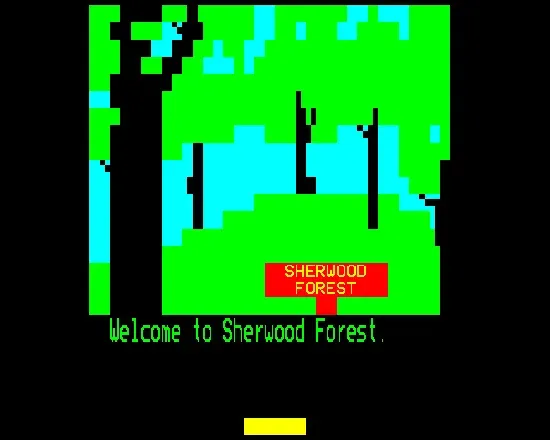
On the BBC Micro, games of this type typically relied on the machine’s strong educational footprint, modest graphics, and practical keyboard-driven input. Without a surviving full design document in the provided material, its exact audio-visual presentation cannot be stated with confidence, but it would have been shaped by the platform’s limited memory and school-computer environment.
Collector’s Value & Rarity
This title should be treated as a scarce archival item rather than a broadly traded commercial classic. Its preservation value comes from its regional educational provenance and the fact that it is documented in a specialist BBC Micro archive, which usually indicates limited circulation and thin market visibility.
For collectors, the most relevant physical details would be any surviving cassette, school distribution labeling, or council/centre paperwork rather than elaborate retail packaging. If extant copies exist, regional release variation and institutional provenance are likely to matter more than box art, since the available record points to distribution through educational and local-government channels rather than standard retail storefronts.