

Historical Context & Trivia
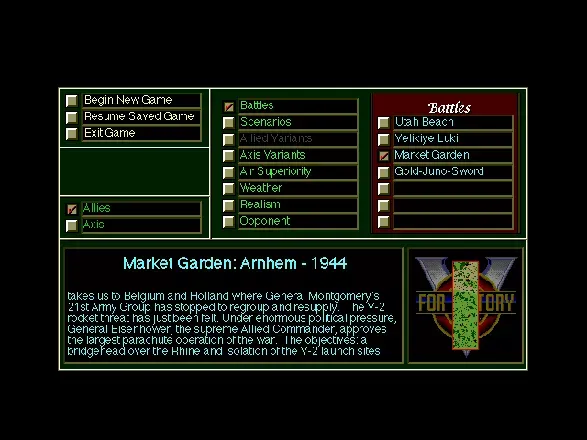
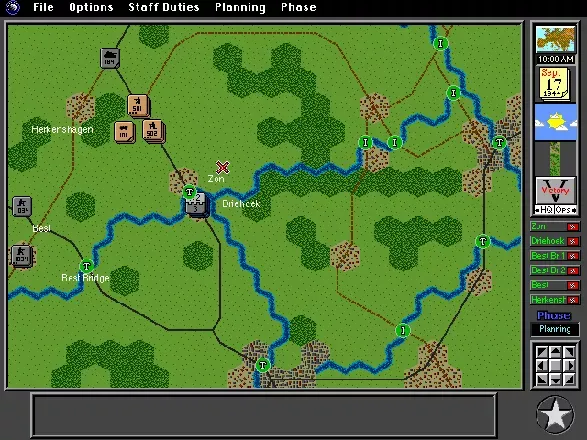
V for Victory: Market Garden was released in 1993 as part of Atomic Games, Inc.’s V for Victory series, a turn-based World War II wargame line that moved from Normandy to the airborne-and-bridge struggle of Operation Market Garden in southern Holland. The game centers on one of the war’s best-known Allied attempts to force a rapid entry into Germany, with scenarios built around the British drive to seize and hold bridges while the German side tries to blunt the advance.
Three-Sixty Pacific, Inc. published the DOS version, and the series’ reputation was built on combining readable interfaces with a detailed operational treatment of large-scale ground combat. Available documentation identifies this entry as the third game in the series and places it squarely within Atomic Games’ early work in commercial computer wargaming.
Gameplay & Technical Features
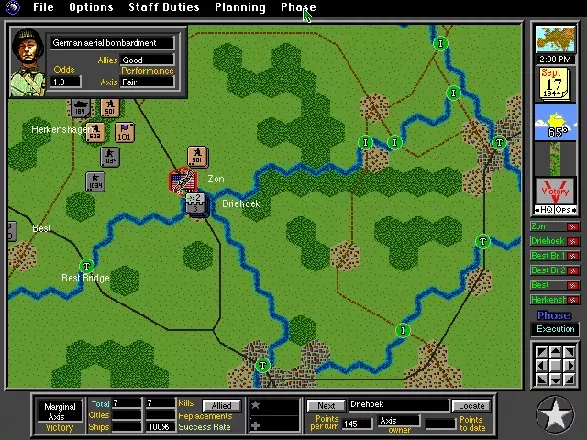
This strategy / tactics title is a turn-based operational wargame focused on maneuver, river crossings, bridge control, airborne deployment, and delaying actions rather than direct-action firefights. According to the game descriptions, the British objective is to secure a corridor across the rivers and advance toward German territory, while the German player must disrupt the airborne divisions and stall the British push.
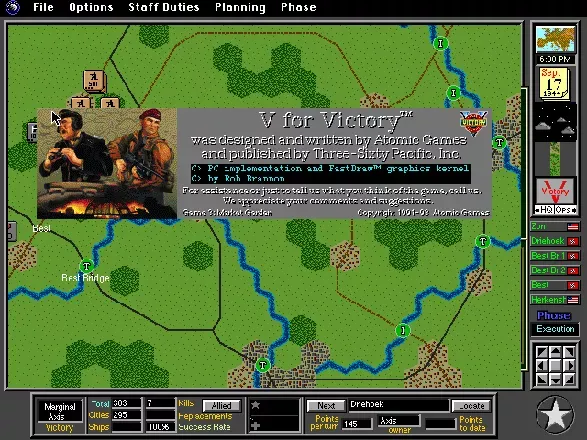
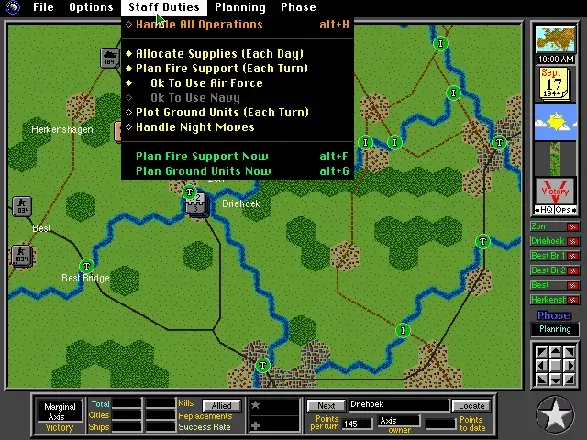
On DOS, the game used the series’ practical, text-and-map-driven design approach, emphasizing command decisions, scenario planning, and historical battlefield structure over arcade presentation. Source material describes it as easy to learn relative to many wargames of the era, with an interface and AI that were intended to make a complex World War II simulation more approachable on early-1990s PC hardware.
Collector’s Value & Rarity
From a preservation standpoint, V for Victory: Market Garden is a documented but niche DOS wargame rather than a mass-market collectible, so its value is driven more by genre interest, completeness, and surviving media than by broad mainstream demand. Archival listings show the original release as a single 3.5-inch HD floppy package, which is important because intact physical copies and verified disk images are typically the most sought-after forms for this kind of title.
Packaging details matter for collectors, especially original disks, manuals, and series-specific inserts tied to the V for Victory line. Regional or edition-specific variation is not strongly documented in the available material, so the safest preservation note is that this is an early-1990s PC war game whose completeness and original collateral are the main factors affecting desirability.